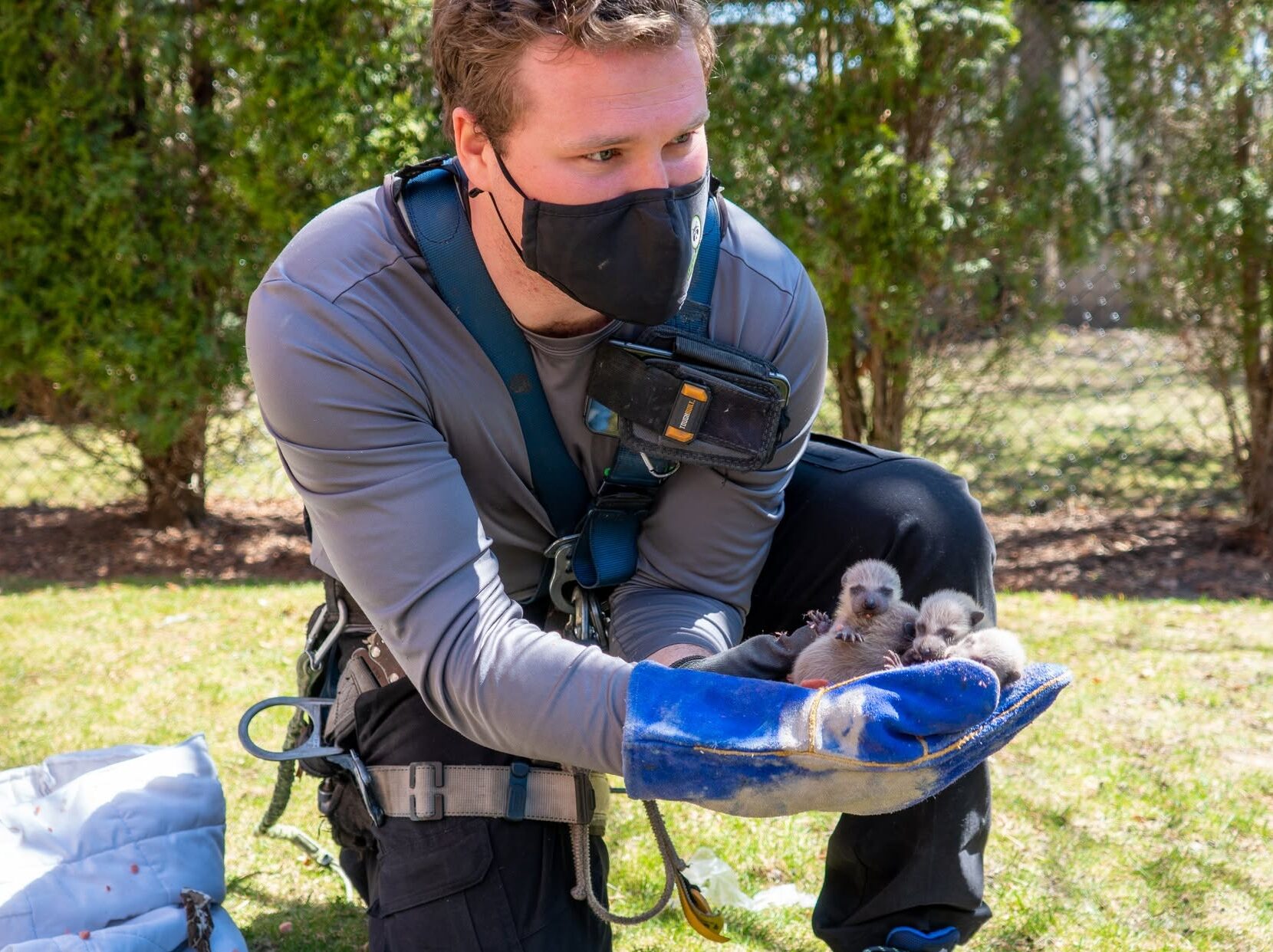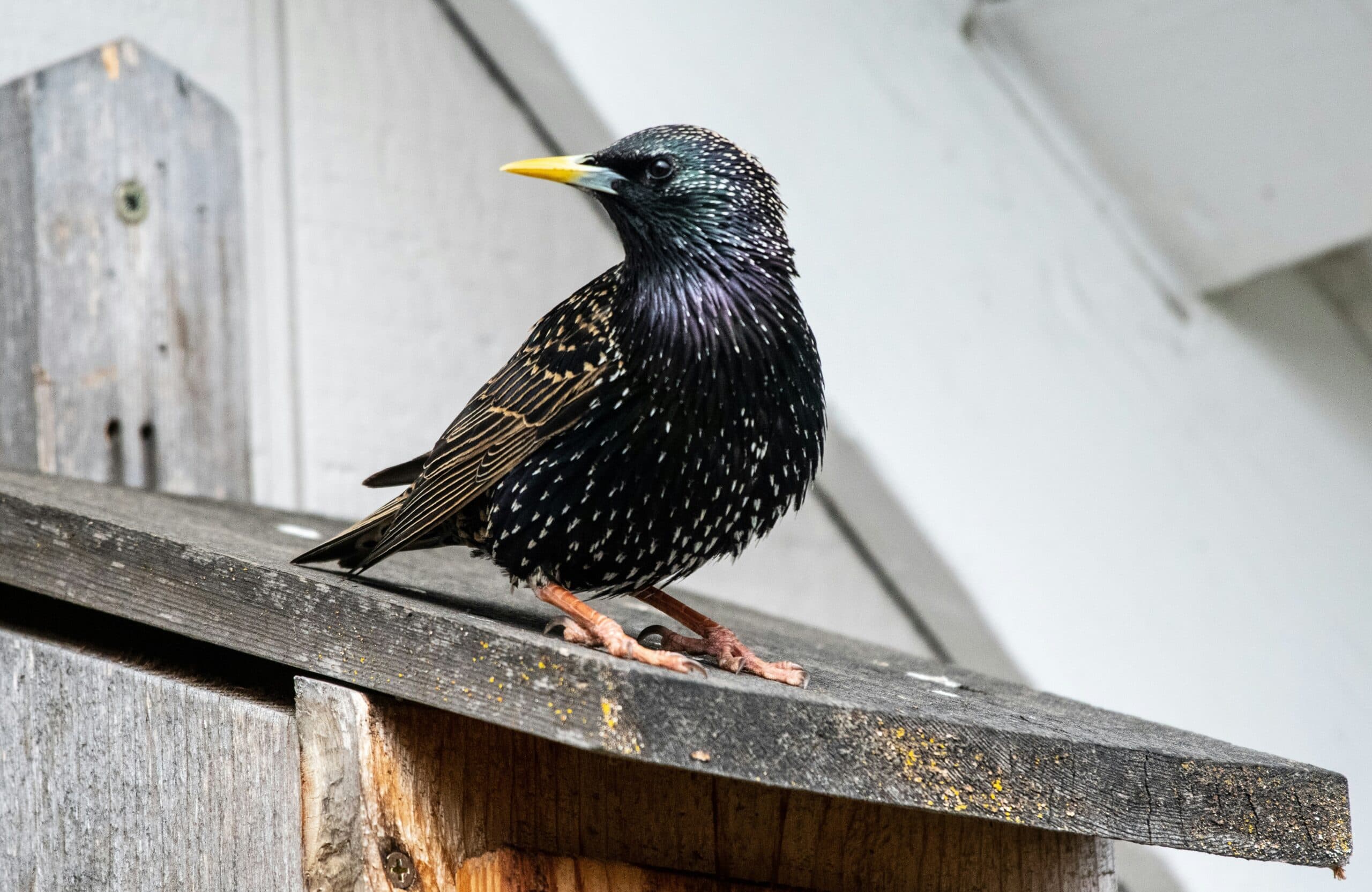
There are many reasons why birds may be found grounded and appear in need of help, including a collision with a car or a window, entanglement in fishing line, predator attacks, a fall from a nest, or a variety of diseases, including West Nile Virus and avian botulism poisoning.
Below you’ll find instructions on how to know if a bird needs help and what to do if you need to safely contain it. You can also view a printer-friendly PDF version here with helpful visuals.
Does the bird need help?
First and foremost, it’s best to leave healthy wild animals where they are. If you’re not familiar with avian anatomy or the different developmental stages of each species, it can be easy to mistake normal characteristics for a crisis. Instead, look for the following signs of distress.
Indications that a bird may be injured or sick include:
- One of its wings is drooping more than the other, or both wings are drooping
- The bird is bleeding
- A leg or wing is sticking out at an odd angle
- It is encumbered by materials such as fishing line or other debris, or is coated with oil or some other contaminant
- It cannot fly, or it flies poorly (weak or crooked flight)
- It has obvious signs of illness, such as eyes swollen shut, it can’t stand, its head is twisted sharply to one side, or the head even appears to be upside down
- It is a water-bird, such as a duck, loon, or grebe who appears to have been washed up on the shore, or is found far away from water where it can’t take off
Safely containing an injured bird
If you’ve assessed the list above and the bird does indeed appear to need help, it’s important to gently and safely contain them until you can get further instructions from your local wildlife rehabilitator.
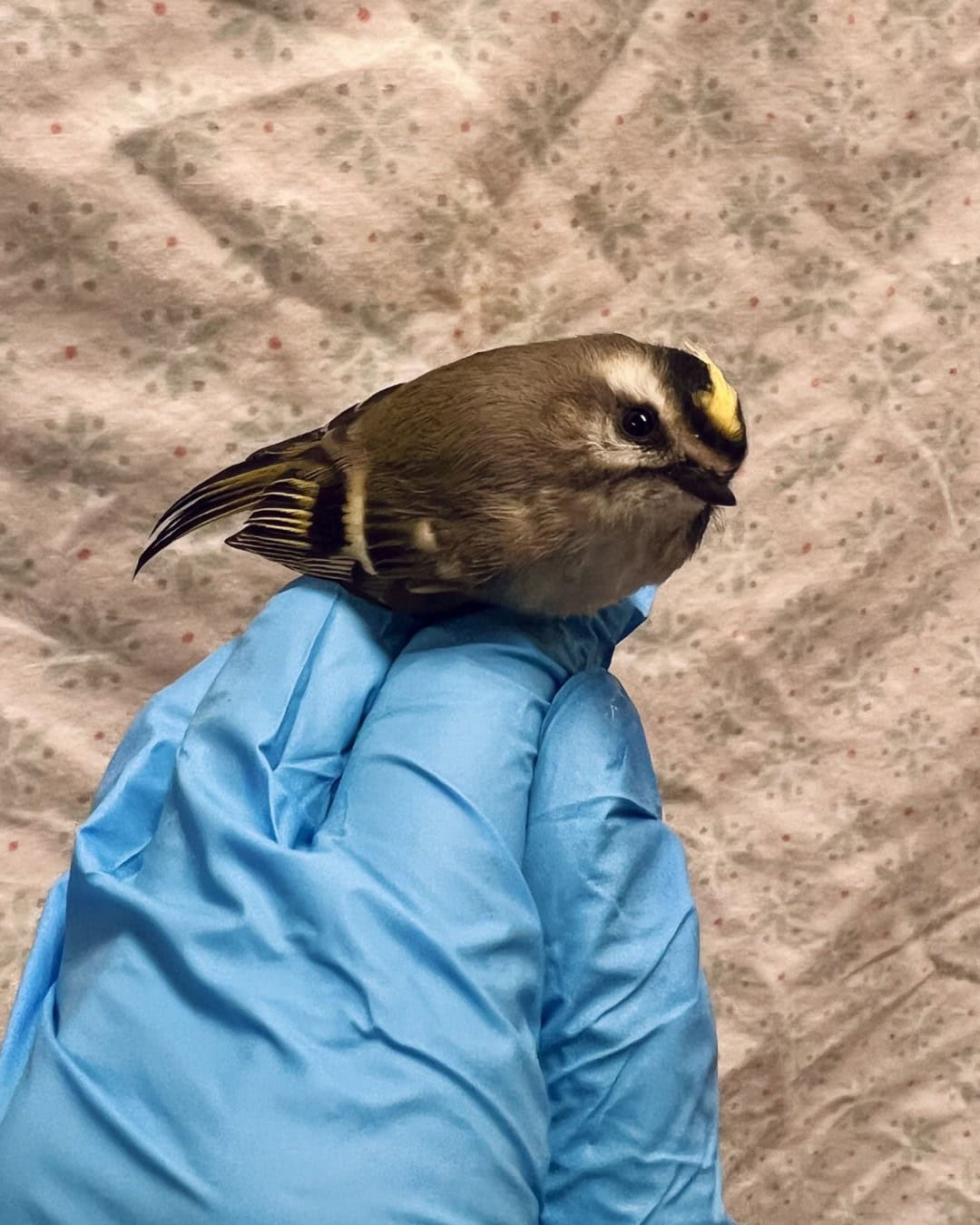
If you encounter a songbird or small bird of prey (like Eastern Screech Owls or American Kestrels) in need of help, follow the instructions below:
- Approach the bird slowly and quietly, ideally from behind, and capture it with your hands by gently grasping it around the body from behind. Caution: while most small birds have weak bills and feet and are not capable of biting or grasping very hard, some large-billed songbirds like Northern Cardinals, Rose-breasted Grosbeaks, and American Crows CAN bite pretty hard. It is recommended that you wear a pair of lightweight leather gloves when capturing these, as well as small birds of prey like Eastern Screech Owls and American Kestrels.
- Cover the bird with a cloth, and use the cloth to pick it up.
- Gently scoop the bird into, or cover with, a cardboard box.
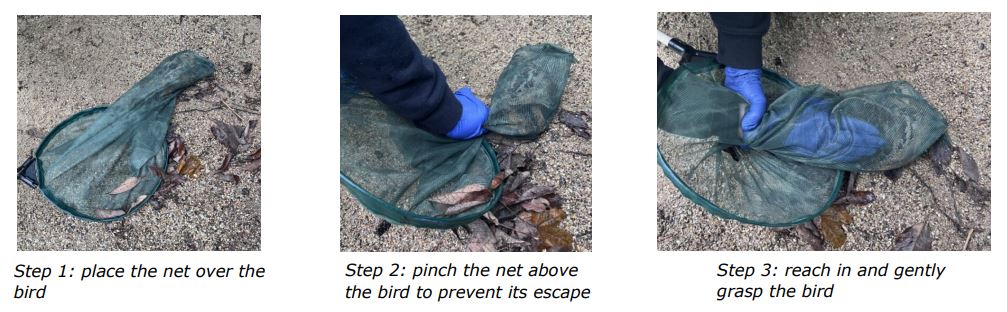
- Capture the bird by placing a fine-mesh net, such as a butterfly net or swimming pool skimmer, over the top of it. With the bird still inside the net, pinch the netting underneath to keep the bird from escaping. Reach in to securely grasp the bird by hand and transfer it to a box, paper bag, or other suitable container.
- Once captured, place the bird in a box or paper grocery bag that has small, pencil-sized air holes poked through the side and/or top. Include a ravel-free cloth (pillow case or T-shirt), paper towels, or newspaper on the floor of the container.
- Close the container securely and place it in a dark, quiet, warm place where it will be undisturbed (keep children and pets away) and call your local wildlife rehabilitator. If you are in Milwaukee County, please call us for further advice at (414) 431-6204.
If a large bird has collided with your window and is on the ground or otherwise appears to be injured, you can use one of the following methods to contain it:
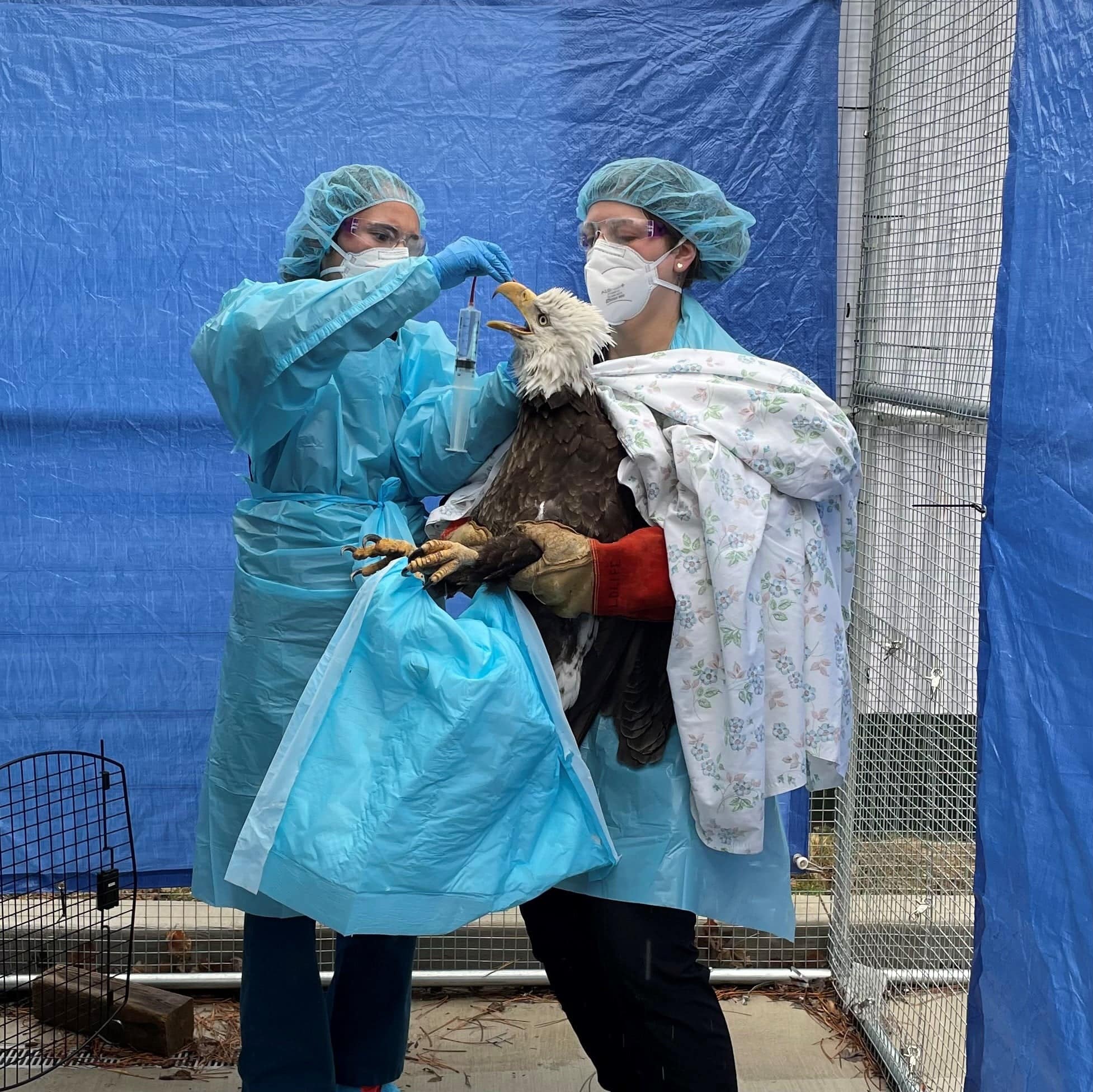
Caution: You should be very careful when trying to capture/contain any of these birds. Some have sharp talons, and others have sharp or powerful bills. They use these “weapons” to defend themselves from predators, and they don’t know that you are trying to help them.
- When attempting to contain any bird that has a long, sharp bill (e.g. a heron or crane) you should wear safety glasses or a plastic face shield to protect your eyes. These birds defend themselves by jabbing with their bill, often at their “attacker’s” face. Ideally, these birds are then contained by holding a large blanket or bed sheet open in front of you and using it to completely drape over the bird.
- For any bird that has sharp talons (e.g. a hawk or owl) you should wear thick leather gloves, ideally, welding-type gloves with gauntlets that protect your forearms. However, these birds may still be able to penetrate the gloves with their talons, so don’t try to grab these birds directly by hand. Instead, for these and any other larger bird such as a duck or goose, cover the bird with a sheet or blanket, or use an empty box. After covering the bird with the box, gently slide a flat piece of cardboard or similar rigid material under the bird to contain it in the box. You’ll then need to tape or tie the box to the flat piece of cardboard to make sure the bird can’t get out of the box.
After you contain the bird, keep the following tips in mind:
- Stressors such as loud noises, talking, excessive handling, or the close proximity of pets or people can create life-threatening stress for the bird. You should minimize stress by not playing your car radio during transport and by keeping talking and other noise to a minimum. Do not needlessly look in on the contained bird.
- Do not give it food, water, or medication unless you are directed to do so by a licensed wildlife rehabilitator.
- Get the bird to a licensed wildlife rehabilitator as soon as possible. Once an animal is injured, the clock is ticking. The sooner an animal gets to a licensed wildlife rehabilitator for treatment, the better the chances for a good outcome. By law, you have a 24-hour grace period in which to get the captured bird to a licensed wildlife rehabilitator.
- Stressors such as loud noises, talking, excessive handling, or the close proximity of pets or people can create life-threatening stress for the bird. You should minimize stress by not playing your car radio during transport and by keeping talking and other noise to a minimum. Do not needlessly look in on the contained bird. Don’t talk to it or pet the bird, as these will not calm it, but only cause more stress.
- Do not give it food, water, or medication.
- Do not lay the bird on its back. Birds have more difficulty breathing when they are on their back.
- Get the bird to a licensed wildlife rehabilitator as soon as possible. Once an animal is injured, the clock is ticking. The sooner an animal gets to a licensed wildlife rehabilitator, the better the chances for a good outcome. By law, you have a 24-hour grace period in which to get the captured bird to a licensed wildlife rehabilitator
- We are a non-profit organization with only a handful of staff members and we sometimes have as many as 500 animals in care in our wildlife hospital! Thus, as much as we’d like to, we are not always able to leave our hospital and the patients we are caring for to come out and pick up animals. We have trained wildlife rescue volunteers who may be able to help, but we are not always able to find a volunteer to help with every situation. If you can’t contain and transport the bird yourself, you may be able to enlist a family member, friend, or neighbor to help you.
- If you absolutely can’t contain or transport a bird, or find a friend or neighbor to help you, by all means give us a call! If you are in Milwaukee County, we’ll do our best to get help for the bird you’ve found. If you are outside of Milwaukee County, you may call the Wisconsin Department of Natural Resources Call Center (1-888-936- 7463) for help finding a licensed wildlife rehabilitator near you, or call us at (414) 431- 6204 and we can assist you with advice over the phone and help direct you to a licensed wildlife rehabilitator in your area.