• Common Feline Health Conditions

    Below are some of the most common medical conditions that affect cats.


    Fleas

    Fleas tend to be more of a seasonal concern, being the most prevalent in the summer and early fall. Often the first time you might notice fleas is when they bite you and your family, so watch closely for the symptoms of fleas on your cat and use protective measures to prevent them.

    The warning sign of fleas are excessive biting; scratching and rubbing by the cat; small, visible, fast-moving brownish-black bugs; multiple skin irritations caused by the flea bites and noticeable “flea dirt;” the small black feces of the flea.

    To test for fleas, moisten a sheet of white paper and hold it under your catT. Briskly comb the cat’s fur. Any “flea dirt” which falls onto the paper will produce a visible red bloodstain.

    To prevent fleas, keep your cat away from unfamiliar animals, especially wild animals. Vacuum and clean the carpet, furniture and the cat’s bedding repeatedly to remove fleas and eggs. Fleas on your cat can be controlled with many different treatments available from your vet. All animals in the home must be treated for fleas as well. Ask your vet or a pest control company for the best way to treat your home and yard for fleas.


    Ear Mites

    Ear mites are insects that are too small to see with the naked eye. If the condition goes untreated, ear mites may cause a secondary infection that must also be treated. Ear mites are transmitted by direct contact between your pet and another infected animal, so be sure to keep your cat away from other animals that have ear mites. Symptoms are vigorous shaking, scratching or rubbing of the affected ear and a thick black crust formed in the ear canal of the animal.

    If you suspect your cat may have ear mites, it is advised that you have your veterinarian check his or her ears. Your veterinarian can recommend the appropriate treatment since many forms of treatment can be effective. The cat should be immediately isolated from other pets until completion of the treatment.


    Feline Upper Respiratory Infection (URI)

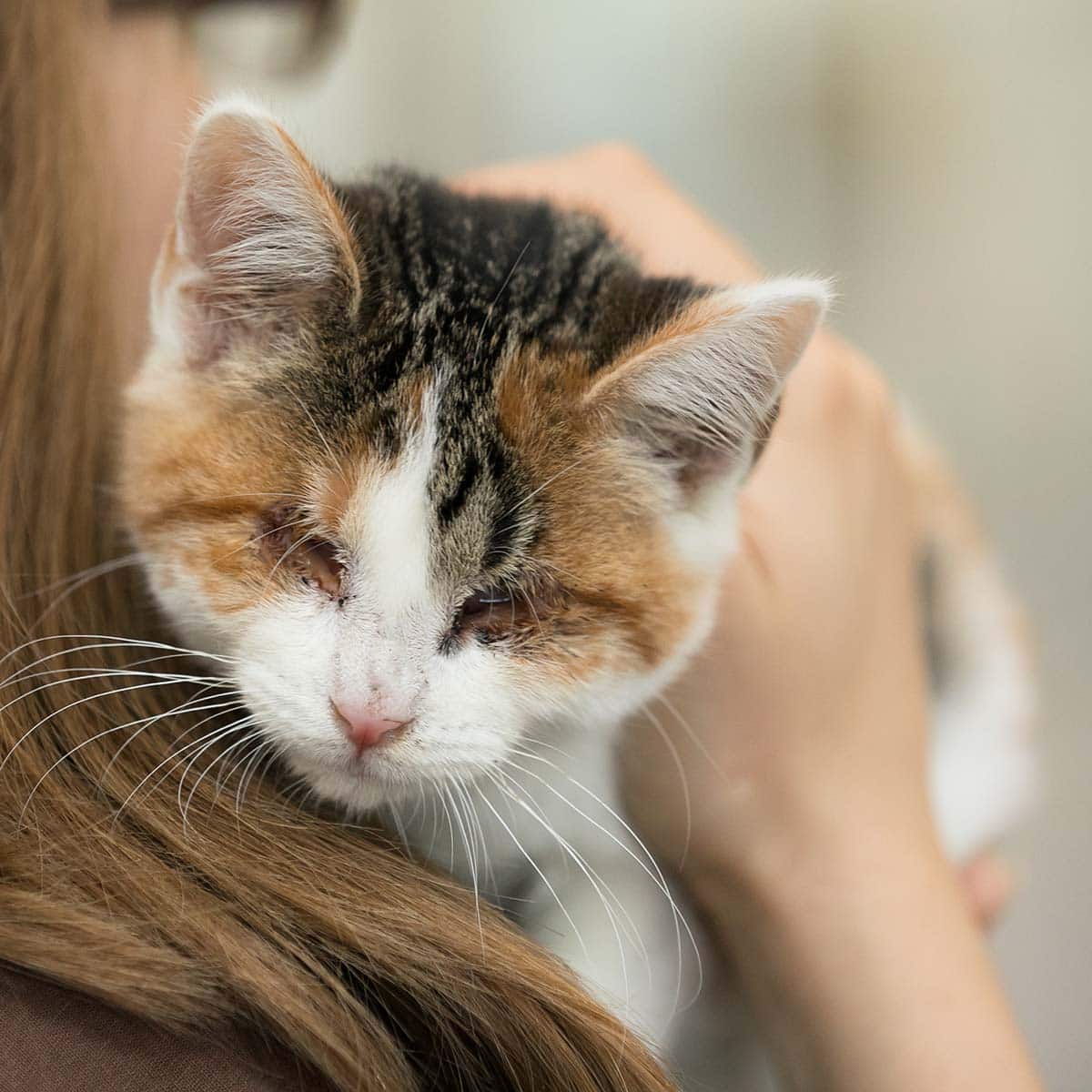
    Feline upper respiratory infection is often referred to as URI. The viruses that cause feline URIs are common among cats. In fact, most cats are carriers of these viruses, even if they never show any signs of illness. Stress and other diseases can cause an otherwise healthy cat to become clinically ill. Feline URIs are often found in situations where there are many cats housed in close quarters, such as animal shelters and pet stores.

    Typical signs of URI are fever, lethargy, decrease appetite, sneezing and/or coughing and discharge from the nose and sometimes the eyes. The discharge may be runny and colorless to thick and yellow or green. In some cases there may be ulceration, or sores, on the nose and/or within the mouth.

    Many cases of simple viral URI resolve without specific treatment in five to seven days. More complicated cases usually require treatment with antibiotics or other veterinary intervention. Good nutrition is essential, but many congested cats refuse to drink or eat. Warming a “smelly” type of canned cat food may help encourage your cat to eat. You should seek the assistance of your veterinarian if mild signs of upper respiratory infection persist for more than five to seven days. Also, see the vet if there is a thick or discolored discharge from the eyes or nose, if your cat is very lethargic or if his or her appetite is greatly decreased. If your cat has a significantly decreased appetite for more than a week, it is important to call your veterinarian as soon as possible.

    Although it does not prevent infection, previous vaccination can often eliminate or reduce signs of illness upon subsequent exposure. Vaccination when a cat is ill is not of benefit and is not recommended.


    Otitis

    Otitis occurs when moisture collects in the ear canal resulting in decreased air circulation, inflammation and eventually infection. Factors contributing to Otitis include excess hair in the ear canal, a history of allergies and dirty or wet ears. Typically, you will notice your cat scratching at his ears or shaking his head. Additionally a strong odor about the face or ears may be detected as well as redness in the ears or an increase of wax in the canal. If severe or left untreated, the infection can result in rupture of the eardrum, excessive growth of the tissues of the ear canal and even deafness. To prevent Otitis, it is helpful to remove excess hair from the ear canal. This can be done by a groomer, veterinarian or by the guardian, if properly trained. Be sure to keep your cat’s ears clean and dry. If you notice any redness, discharge, or foul odor of the ears it is important to contact your veterinarian for proper care and treatment of your cat’s ears. Ask your veterinarian for a recommendation on a diet which may help to reduce cases of infection. 


    Feline Leukemia

    Feline leukemia is a contagious viral disease of cats. It is transmitted through the saliva and nasal secretions of an infected cat and infects only other cats. Feline leukemia can cause tumor formation, bone marrow disorders, immunosuppression and many secondary diseases. Most cats that develop a persistent infection die from the disease within two years. Feline leukemia is a disease found in our area, so your cat is at risk.

    Luckily, feline leukemia can be prevented! It is important that you talk to your veterinarian about an appropriate vaccination program. Another preventative measure you should take is to not allow your cat to roam outdoors, which could result in contact with a feline leukemia positive cat.

    Even if your cat or kitten has tested negative for feline leukemia, it is important to have the cat re-tested in the future in case of recent infection and also to keep your cat current on her vaccinations.


    Feline Panleukopenia

    This virus is also called feline distemper, feline parvovirus or feline enteritis virus. It is contagious to all species of cats and raccoons. Signs include vomiting, depression, fever and severe diarrhea. The virus may attack the fetus in utero or kittens shortly after birth and cause death or birth defects. The younger the cat, the greater the chance he or she will NOT survive. The virus is transmitted through all body secretions, but urine and feces are the most potent sources of infection. The virus can also live on contaminated rugs, bedding, shoes and other objects. An effective cleaning disinfectant is 4 ounces of bleach in one gallon of water.

    Cats remain highly susceptible to panleukopenia until two weeks after the last injection of the immunization series. Death from panleukopenia may result from dehydration, overwhelming bacterial infection from the cat’s lowered resistance or blood loss from internal hemorrhage.

    In Feline panleukopenia, the cat often becomes ”dehydrated” from the vomiting, diarrhea and inability to consume fluids. Life is NOT possible when 12-15% of the normal body fluids are lost. This is the reason fluid therapy is so important. Treatment is aimed at maintaining the normal composition and preventing secondary bacterial infection. We have no cure for any animal virus, just as there is no cure for any human virus.

    Whenever you suspect an illness, infection or virus of your cat, please contact your veterinarian.

  • Children and Cats

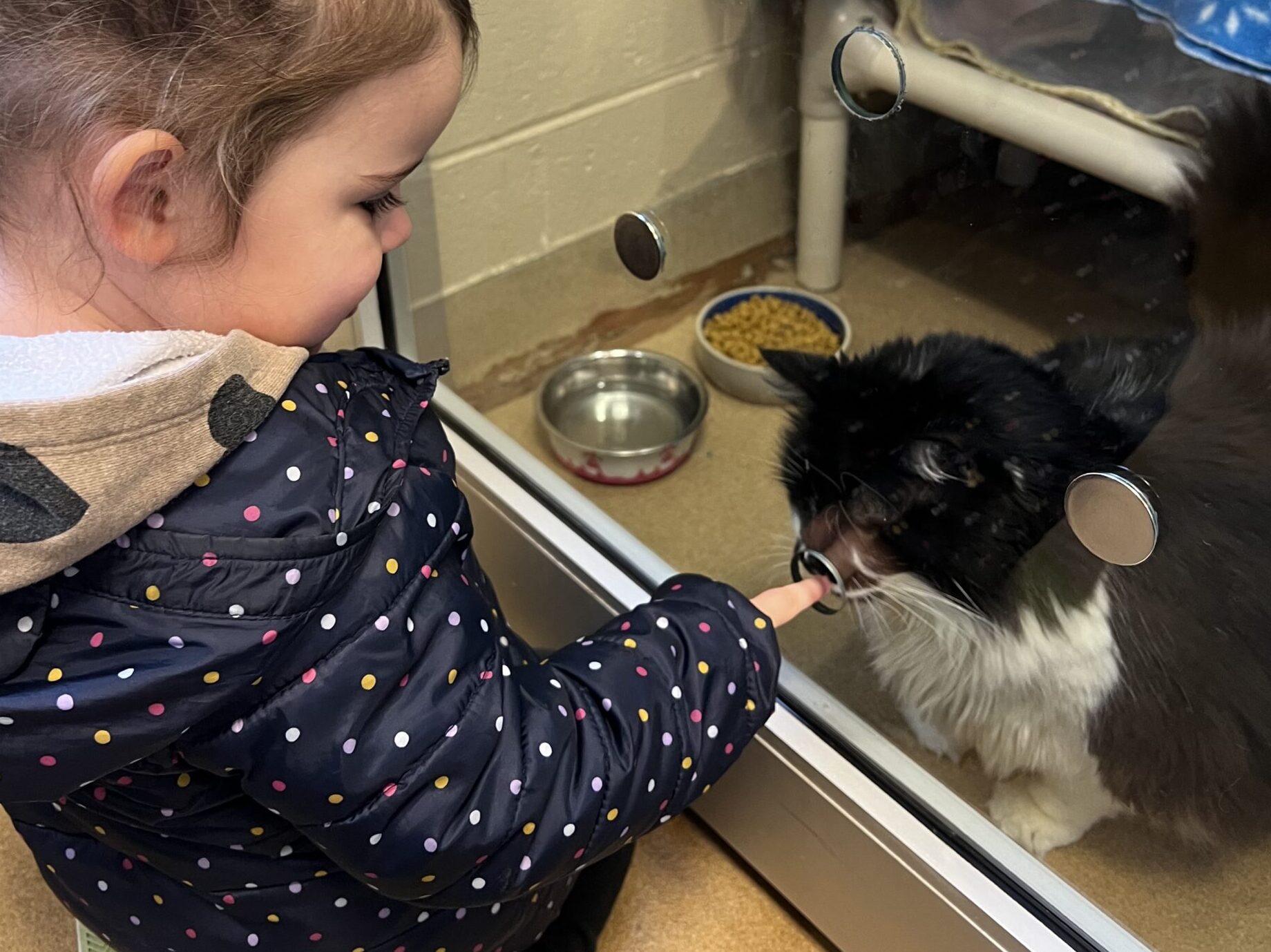
    Many children thoroughly enjoy sharing their lives with pets and some cats share the same feelings. However, to help build a safe and positive relationship between kids and their feline friends, it is important to set both up for success through management, clear communication, and guidelines. 

    Before we get started, it’s important to note that we highly recommended an adult is present any time a child is interacting with an animal. The level of supervision depends on the child’s age and ability to follow rules, along with the animal’s comfort level. 

    Setting Expectations
    While bringing home a cat is an incredibly exciting time for everyone, it is important to create clear expectations for our children. Cats are individuals and, as such, will have individual levels of tolerance for petting, sensitivity around resources, and sensitivity about noise and activity. Although a cat may have lived with children previously, the relationships in a new home will be starting from scratch. Children will need to understand that until they get to know their new cat and their new cat gets to know them, they will need to take a “hands off” approach to interacting. Let them know that petting is only allowed when the cat approaches them and solicits attention, and only when they are in the presence of a supervising adult. If the cat does not approach the child, they will need to give the cat space. This will require a high level of commitment, supervision, and support from the adults in the household. Emphasize that the entire family is responsible for helping your new cat feel safe and secure. All family members should familiarize themselves with cat body language to help them accurately understand their companion’s comfort level and ensure their safety.

    Management
    Management is one of the most important tools you will use to help your children develop a positive and successful relationship with their new cat. It is important to provide your cat a safe place to go where they can be away from the activities of the family. 

    It is beneficial to have barriers and gates in place to prevent your cat from entering spaces where your children are, and other barriers that will allow your cat to jump over or go under while still preventing a young child from following them. Barriers/gates are there to support your supervision plan. 

    Setting up a safe space for your cat
    It is important for your cat to have a safe space in the home where they are fully comfortable and can avoid interacting with people when they choose. There will be times when you are unable to supervise your cat and child together, or when there are extra children in the home and supervision of the cat with all the children in unrealistic. In these situations, it is important to have a safe space for your cat to spend time so that supervision is not necessary, and everyone stays safe and comfortable. This space should always be available to your cat as a safe place, even when you are able to supervise. 

    Since you will be using this room to confine your cat at times, it needs to include all a cat’s necessities. This includes food, water, litter box, comfy bed, toys, and at least one hiding place. Giving them both high and low escape routes will increase their confidence, so you may consider putting a cat tree in the room for those who like a high vantage point, and ensuring they have a cat den, box, or furniture they can easily hide under, too. Help your cat gain positive associations with the room so they become comfortable spending time there. You can do this by giving them treats and enrichment in the room; leave treats in the bed and cat den to encourage them to explore. 

    Never allow young children to follow your cat into their safe room. As an adult, you can be in this room with your cat while allowing them to choose to interact or not. However, make sure the activities you are doing in the room are quiet, as your cat should learn that this safe space is consistently a low stress environment, which means low volume. Reading a book or listening to a podcast with headphones in are both great ways to bond with your cat in a low-pressure environment. Keep yourself still and movements predictable while letting them decide if they’d like to approach you for affection or not.

    It will be important to slowly build up your cat’s comfort level spending time isolated to this room. Begin by providing them a high-value enrichment item or small plate of canned cat food and closing the door for only a few seconds. If your cat remains relaxed, increase the amount of time the door is closed over time until they can remain in the room for a couple hours if needed. 

    Young Children
    Very young children (0-5 years) will naturally have very limited impulse control and lack the ability to follow direction consistently from adults. It is important to recognize that even if your young child is typically very polite and calm with your cat, you cannot guarantee that they will always be so. It only takes one misstep to negatively affect the relationship between your cat and children. The expectation for children of this age should be that their relationship is primarily “hands off.” Young children should be redirected away from the cat unless the cat is very clearly soliciting attention from them. Young children are active, noisy and can be quick or unpredictable in their movements, which can be scary for cats. At this age, it’s unrealistic to expect a fairytale bond between your child and cat, and this should not be your goal during this stage. It is most important for your cat to learn that it is safe to simply share space with your young child. This is the foundation for a positive relationship for the rest of their lives.  

    If your child is spending time on the floor, you can set up a gate or pen between the cat and small children who are laying on the ground or crawling. This will minimize the likelihood of your child approaching the cat.

    If your young child is adamant about petting the cat, it can be helpful to purchase a toy cat that looks as much like your actual cat as possible. If the child wants to pet the actual cat (and the actual cat is not interested in petting), encourage the child to pet the toy cat instead. The toy cat can have the same name as the actual cat. Remember, the toy cat’s purpose is to teach them how to gently and appropriately pet the actual cat, so model and encourage gentle handling with the toy cat in the same way that you would with the actual cat. Even if your cat is soliciting attention, having your child practice soft, gentle pets on a toy before the actual cat can help set your child up for a successful interaction in the future. 

    Older Children
    Slightly older children (over the age of 5 years) are more capable of following directions and will be able to learn about cat body language. This means that you can begin to instruct them on concepts like the “Three Second Rule.” This is a practice where you pet the cat for three seconds, take your hands away, and pause to read the cat’s body language. If the cat walks away, the interaction should end. If the cat looks uncomfortable (ears swiveled to the side, pupils dilated, tail twitching, etc.) that is a cue for the adult to instruct the child to walk away from the cat. If the cat solicits more petting (nudges their hand, leans into the child, etc.) the child can pet the cat for three more seconds and then pause again to re-assess the cat’s body language. These interactions should still be closely supervised by an adult.  

    Teenagers 
    Many teenagers can take an active role in the care of the family cat. Feeding, training them, playing with toys, and providing enrichment are great ways for your teenager to build a positive relationship with your cat. Keep in mind that teens may be tempted to be overly relaxed with your new cat and should receive support, supervision, and guidance about cat body language until they are both comfortable and are interacting in a consistent, safe manner. Even teens may need to be reminded that your new cat will need space and time to acclimate to any life changes and should only interact if the cat chooses to approach your teen.  

    Although cats are generally an easy size for teens to scoop up and hold, remind teens that not all cats enjoy being held. It is important for them to build a relationship with the cat prior to picking the cat up. There may be some cats who never enjoy being held or picked up and it is important for all family members to understand and respect the cat’s choice. 

    Clear rules that should apply for ALL children: 

    • Children should never attempt to pull a cat out of a hiding place or cat den.
    • Children should not attempt to touch or interact with cats while they are eating food or chewing on an edible item.
    • Children should never interrupt or attempt to interact with a cat while they are using the litter box.
    • Children should never attempt to interact with a cat while it is sleeping.
    • Children should never attempt to lay on the cat.
    • Young children should never attempt to pick up a cat (teenagers, with the support and supervision of their parents, may be able to pick up some cats depending on the cat’s individual comfort level).
    • No hitting, pulling, pushing, or yelling at the cat under any circumstances.
    • Children should never hug or kiss the cat 

    Types of Interactions to Encourage: 

    Passively Sharing Space
    It is important to teach your children and cat to be relaxed while sharing space with each other without the pressure of physical interaction. A great way to set this up is to give each of them an activity on separate sides of the room. That might be setting your child up with art supplies at a table and your cat with a treat-dispensing toy on the other side of the room. You could also sit down to watch a movie with your child while your cat receives petting from another adult. Give your child the opportunity to pick out what each of their activities will be and work on building enthusiasm for this type of interaction. Be sure to remind them about not approaching the cat while they have a resource or are playing. If your child attempts to approach the cat during these times, redirect your child to another activity or end interaction. 

    Playing with Toys
    If your cat enjoys playing with toys, that can be a great way for your child to interact with them. Always provide your child with wand type toys like a cat charmer or feather wand, as the long handles increase the space between them and the cat. When cats play, they are acting out the same behaviors they would show while hunting prey (pouncing, leaping, swatting, biting, etc.). Never allow your child to manually engage your cat in play with small toys, such as a glitter ball or toy mouse. This type of play puts their hands and even face too close to the prey-focused cat, leaving them vulnerable to inadvertent scratches or bites. If your cat prefers small toys like jingle balls or mice, consider gathering them all into a small basket then having the child toss a toy across the room for the cat to chase. Once they have stopped batting around the toy, the child can toss another out to them, keeping a safe distance and repeating the process until they’re out of toys. Once your basket is empty, that is the end of the play session; do not go and gather the toys until much later when the cat has either left the room or is calm and resting.

    It’s also important to remind your child to never pet the cat during playtime, and they should give them plenty of time and space after a play session to calm down before attempting to interact. A cat in prey mode will likely treat a hand offered for petting as something to be hunted rather than seeing it as a friendly gesture. 

    Some cats show a behavior referred to as overstimulation with play. This describes a cat who will redirect their play behavior from the toy to the human (generally their feet or hands) during a play session. This results in the cat play-biting or swatting the person facilitating the play session. If your cat begins to show this behavior, it’s important to stop your child from engaging them in any play sessions.  

    Training
    Older children can assist and/or conduct training sessions with your cat. Cats are intelligent and active creatures who excel when given learning opportunities and can follow similar cues to dogs such as sit, down, shake, etc. Be sure to use exclusively use positive reinforcement, rewarding the desired behaviors rather than punishing the bad. This will be a great opportunity for your cat to have positive interactions with your child. For more information, check out Karen Pryor’s book Getting Started: Clicker Training for Cats.

    Creating and Giving Enrichment 
    Daily mental and physical enrichment is an important part of your cat’s daily life. One great option for mental enrichment is treat-dispensing toys. There are many ways to create your own enrichment items for your cat. Turning this into an art project for your children will give them an opportunity to be involved in your new cat’s care and will be beneficial for your cat. Your child can create the items and then choose your cat’s mental enrichment each day. This is an especially great way to give your child an active role in your new cat’s life, even if the cat is not comfortable with physical interaction with your child.  

    Visiting Children
    Even if your family cat is doing well with your own children, that is not a guarantee that they will enjoy the company of new, visiting children. Families with children will likely also entertain their children’s friends and will need to be prepared to manage those interactions and set ground rules the moment the visitors walk in the door. Be sure to utilize your cat’s safe space when new children are coming over and be sure that you never leave your cat unattended with any kids. Your cat’s body language should be closely monitored.

    Remember, petting should never be forced. Holding your cat in place in any way – even to introduce them to well-meaning guests – is unfair and inappropriate; it will degrade trust build between you and your cat, and it will teach children unsafe animal handling habits. Some cats simply do not enjoy petting and it will be important to foster a positive relationship through other types of interactions. It is incredibly important that your cat always has a choice in whether to interact with people, but especially children. Be sure that your cat has the option to move away and leave any interaction that they are having with a child.  

  • Cat Supplies Shopping List

    Find everything you need for your cats (and more!) in our online retail store, Animal Antics! 100% of the proceeds benefits WHS!

    Food and Water Dish:

    • Food and water dishes are not all created equally. 
    • Avoid plastic food and water dishes since they are highly porous and easily scratched making them a bacteria magnet.
    • Ceramic dishes are great if they are coated in a lead-free glaze. Make sure there are no chips or cracks since this can allow for a higher risk of your cat ingesting part of the ceramic.
    • Stainless steel bowls are typically the best option since they are non-porous and much easier to clean.

    Food:

    • Many people don’t think about what they want to feed their cat before bringing them home. It is important to understand that cat foods come in a large variety and you want to be careful with what you choose.
    • Remember cats are carnivores and REQUIRE meat in their diet to survive. Cat food that is on the cheap end typically does not contain enough nutrients for cats causing pet owners to spend more money at the vet.
    • A safe rule of thumb to know is that higher quality cat food is typically found in pet stores rather than in big box stores. Many pet stores have cat food organized by quality as well, making it easier to find exactly what you want.
    • Remember, when first bringing home your cat to have some of the food they are used to transition them to the food you would like them to be on. Without a transition period they are more likely to suffer from digestive upset.

    Brush and Nail Trimmer:

    • Grooming your cat is a great bonding experience for you and your cat. Daily brushing helps prevents mats from occurring on any place your cat is unable to reach.
    • Grooming regularly also helps you to keep a close eye on any physical ailments that may be occurring with your cat.
    • Regular trimming of your cat’s nails will help to keep them dull and be beneficial in numerous ways.
    • If you are uncomfortable with grooming your cat, make an appointment at a local groomers. 

    Scratching Post:

    • It is normal and healthy for cats to scratch. Make sure to have a scratching post in your home prior to your new cat’s arrival.
    • After bringing your new cat home, place your cat’s paws on the scratching post to help encourage you cat to scratch here.
    • Scratching relieves stress and helps put your cat’s scent in your home. Once your house starts to smell more like you cat, your cat will feel more at home!

    Litter Box and Scoop:

    • It is recommended to have a litter box for each cat in your house plus one extra one.
    • When first bringing your cat home you will want to have a spot available for your cat to go to relieve it’s self.
    • Most cats are uncomfortable in hooded litter boxes so it is recommended to start with an open litter box. If you would prefer your cat to use a hooded litter box, then you will want to make sure you also have an open litter box so your cat can choose and get use to them both.
    • Daily scooping of your litterbox will help to ensure that your cat continues to use it regularly.

    Litter:

    • We recommend starting with unscented and non-clumping litter for your new cat.
    • After your cat becomes used to their new home you can begin switching your cat to a clumping litter.
    • For declawed cats, due to increased sensitivity in their paws from the declawing procedure, clumping litter can hurt their paw pads to push.
    • It is best to avoid scented litters since cats can smell more with their nose than we can. Overpowering scents may make your cat avoid using the litter box.
    • If you would like to try a scented or clumping litter but want to ensure that your cat will use it, have one litter box be what they are used to and the other be what you would like to try to get your cat used to it.   

    Toys:

    • Most cats become a bit introverted when first coming into a new home. Help them come out of their shell with a toy that allows some distance still between you and them, like wand toys/cat charmers. Cat charmers are highly recommended toys that many cats love to play with for hours.

  • Cat Nail Trimming 101

    Make manicures enjoyable and easy for both you and your cat.

    Does your kitty disappear when the clippers come out? Do you have to wrap her in a towel to give her a manicure? According to our behavior experts, calm, enjoyable nail-trimming sessions are not only possible—that’s how they should always be! Check out the following tips for getting kitty to relax while you trim, turning nailclipping sessions into enjoyable together time. 

    Before beginning you will want to set the mood.

    Ideally you should introduce your cat to nail clipping when she’s a kitten. Choose a chair in a quiet room where you can comfortably sit your cat on your lap. Get her when she’s relaxed and even sleepy, like in her groggy, after-meal state. Take care that she isn’t able to spy any birds, wild animals or action outside nearby windows—and make sure no other pets are around. 

    Make friends with your cat’s paws.

    Gently take one of your cat’s paws between your fingers and massage for no longer than the count of three. If your cat pulls her paw away, don’t squeeze or pinch, just follow her gesture, keeping in gentle contact. When she’s still again, give her pad a little press so that the nail extends out, then release her paw and immediately give her a treat. Do this every other day on a different toe until you’ve gotten to know all ten. 

    Get comfortable with the clippers.

    Your cat should be at ease with the sound of the clippers before you attempt to trim her nails. Sit her on your lap, put a piece of uncooked spaghetti into the clippers and hold them near your cat. (If she sniffs the clippers, set a treat on top of them for her to eat.) Next, while massaging one of your cat’s toes, gently press her toe pad. When the nail extends, clip the spaghetti with the clippers while still holding your cat’s paw gently. Now release her toe and quickly give her a treat. 

    Never cut the quick.

    The pink part of a cat’s nail, called the quick, is where the nerves and blood vessels are. Do NOT cut this sensitive area. Snip only the white part of the claw. It’s better to be cautious and cut less of the nail rather than risk cutting this area. If you do accidentally cut the quick, any bleeding can be stopped with a styptic powder or stick. It’s a good idea to keep it nearby while you trim.

    Time to clip.

    With your cat in your lap facing away from you, take one of her toes in your hand, massage and press the pad until the nail extends. Check to see how much of a trim her nails need and notice where the quick begins. Now trim only the sharp tip of one nail, release your cat’s toe and  quickly give her a treat. If your cat didn’t notice, clip another nail, but don’t trim more than two claws in one sitting until your cat is comfortable. Be sure to reward her with a special treat afterward. Please note, you may want to do just one paw at a time for the first couple of sessions. 

    Clipping Schedule

    A nail-trimming every ten days to two weeks is a nice routine to settle into. If your cat refuses to let you clip her claws, ask your vet or a groomer for help. 

    What NOT to do:

    •  If your cat resists, don’t raise your voice or punish her
    • Never attempt a clipping when your cat is agitated or you’re upset. And don’t rush—you may cut into the quick
    • Don’t try to trim all of your cat’s claws at one time
    • Do NOT declaw. This surgery involves amputating the end of a cat’s toes and is highly discouraged by the ASPCA.
    • Instead, trim regularly, provide your cat with appropriate scratching posts and ask your veterinarian about soft plastic covers for your cat’s claws. 
  • Cat Enrichment

    Providing both mental and physical enrichment/exercise is important to help your cat live a happy, healthy, stimulating life,. When cats live outside, they hunt, climb, and explore. These are wonderful forms of exercise and enrichment, but outdoor life poses many dangers for a cat, so we recommend you keep your cat indoors. Our houses don’t naturally provide the same level of enrichment, so it is our job as cat guardians to create sources of both mental and physical exercise.

    Treat dispensing toys

    One excellent way to encourage your cat to “hunt” or “forage” when living inside is to give them a treat/puzzle toy. However, most stores offer far fewer puzzle options for cats than for dogs, so making your own using everyday items is highly recommended (and saves money). Here are a couple ideas you can create at home:

    Use an old cardboard box (remove any plastic or labels) and cut small holes, wide enough for a paw to reach in. Place several treats or pieces of kibble inside and seal the box. The cat will have to reach inside or knock the box around to get out the pieces of food. You can do the same thing using empty paper towel tubes by folding the ends up and cutting holes along the length of the tube, or you could try using an empty cardboard egg carton. You can even use paper bags – just place several treats, crumbled paper, and toys inside, then allow your cat to pull the paper out to get the treats and/or toys.

    Mealtime is a great opportunity to provide your cat with hunting and foraging practice! Take their kibble and divide it into several empty toilet paper tubes, then place the tubes around a single room of your home.  When you first introduce your cat to this game, make the tubes easy to find by keeping them highly visible and relatively close together. Your cat will have to use their nose to smell and search for the food. Once your cat learns the game, you can begin to make the tubes incrementally harder to find, resulting in your cat having to hunt around the room for their meal. If your cat is the only animal in the home, you can expand the hunt to multiple rooms. If you have other animals in the home, be sure to block off access to the “foraging” room during the hunt. If you have multiple cats, you can close the cats in separate rooms allowing them to have their own individual meal hunt.

    Interactive toys

    Cat are active, energetic animals and in addition to providing stimulation for their minds, we also need to provide outlets for their physical energy. Schedule 2-3 play sessions for you and your cat each day. This will consist of taking 5 to 10 minutes (or longer if your cat stays engaged and would benefit from more activity) multiple times a day, engaging your cat in active play. Using a wand-type toy during these play sessions is recommended, as the movement encourages your cat to run and jump for the toy while keeping your hands safely out of the cat’s reach. 

    Solo Toys

    It is also important to supply your cat with a variety of toys they can engage with on their own throughout the day. This could include crinkle balls, fake mice, catnip toys, etc. Visit the Wisconsin Humane Society’s store or shop online to purchase the toys of your choice. To keep your cat engaged and the toys novel, rotate your toys every few days, having just 3 or 4 toys out at a time and storing the rest. This will keep their toys exciting and new without you having to frequently purchase new ones!

    Scratching Posts

    Scratching is another natural behavior for cats. By providing appropriate items for your cat to scratch on, you are not only reducing the likelihood your cat will scratch an unwanted surface, but also provide enrichment and a healthy way for them to practice a natural behavior. See the Cat Scratching handout for more information on scratching posts. 

    Create vertical spaces and hiding spots

    Cats love to have a view and this means having multiple levels to climb.  You can purchase a cat climber or get creative using DIY options like book shelves, dresser drawers, and other household items. Just be sure they are strongly secured and won’t tip or fall under the cat’s weight. If you have a skittish cat, it’s important to provide them with contained space in every living area where they can go to feel safe. Whether it’s space under your bed, a cozy blanket under a side table, or a store-bought hidey box, your cat will be grateful for the chance to unwind.

    Music and videos

    Just like humans, cats enjoy the sights and sounds of nature. If you can place a climber or piece of furniture near a window, they’ll admire the passing critters before eventually drifting off to sleep. During warmer weather, you can open the windows as long as you have secure screens in place. When it’s too cold out for open windows, try playing a nature soundtrack or animal show on your television. If you search online, there are many YouTube videos created for cats that show squirrels, birds, or aquariums. These should be provided for short periods of enrichment, not left on all day.

    Field trips outside

    Although it is important for a cat’s health and safety to live indoors, supervised field trips or other forms of outdoor experiences can be great enrichment and beneficial to your cat’s life. Here are a couple ways you can safely provide your cat time outside.

    Leash walking

    Like dogs, you can take your cat for a walk on a leash! This adventure will most likely result in less walking and more exploring around a small space, so while it won’t provide you much exercise, it will provide your cat a great deal of enrichment. When deciding to take your cat outside on leash, there are a few things to consider. First, it is important to acclimate your cat to a harness and leash inside before venturing outside. Many cats are initially uncomfortable with a harness and leash. It is important to slowly introduce them to this equipment. See the handout on Leash Training for details on how to begin this process.

    Once your cat is comfortable on leash, consider where you are going to explore. Ideally, you will stay close to home and provide your cat a grassy area with trees, bushes, flowers, etc. Make sure all your nearby plants are safe for cats before allowing them to explore, and keep your cat far away from traffic. If you have loose dogs in your area, make sure you are in a fenced-in space to avoid an accidental encounter with an unknown dog. 

    Outdoor cat enclosures

    You can also create an outdoor enclosure for your cat. This could be anything from a window box attached to your home, to something larger resembling a chicken coop. The important part is making sure your cat cannot escape and unintended animals can’t get in. When your cat is in their enclosure, be sure to monitor them at all times. Check out Catio Space online for ideas on how to create your own DIY cat enclosure.

    Cat strollers

    Cat strollers are not for every cat, as some will find it scary and stressful. However, for some cats who are confident and want to explore, strolling along with the family can be a very positive experience. To see if your cat would enjoy a stroller ride, begin with the stroller inside and allow your cat to explore the novel object. Place treats in the stroller seat to encourage them to jump in and test it out. If they are comfortable, begin with an indoor ride and watch your cat’s body language. If they are yowling, trying to dart away, or cowering in the stroller, they either need more time to get used to the stroller slowly indoors, or they may not be the stroller type. If your cat is relaxed, looking around, and not showing signs of stress, then take the next step of going outside. Keep your walks brief and close to home at first, slowly working up to longer trips as your cat acclimates over time. Continue to observe your cat’s body language throughout every walk outside. Enrichment is meant to stimulate your cat’s mind, not increase stress. 

    If your living situation does not allow for you to take your cat on outdoor adventures, consider bringing the outdoors inside for your cat’s enjoyment.    

    Nature enrichment boxes

    Create a nature box for your cat to explore. Take a cardboard box or a low sided Rubbermaid container, and place objects from nature inside. This could include sticks, leaves, grass, cat-safe flowers or tree clippings, rocks, etc. Place this box on the floor inside your house and allow your cat to explore and investigate. This will provide new textures and smells to stimulate your cat’s mind.

    Cat grass

    Cat grass is specific grass (generally rye, wheat, or barley) grown inside for your cat’s enjoyment and enrichment. Cats are naturally drawn to the grass and many enjoy chewing on it. There are several health benefits to cats eating cat grass, as well. Cat grass is high in fiber and helps with hairballs.

    Window views

    Providing a way for your cat to comfortably sit by the window and observe the outside world can be enriching for a cat. To up the fun, you can open a screened window during nice weather and allow your cat to experience the fresh air and smell the scents from outside. You can also place a bird feeder outside the window to attract birds and provide a live “TV show” for your cat to enjoy.

  • Caring for Fearful Cats

    Many cats are fearful of new people, places, and/or things for a variety of reasons that may include a lack of exposure to new experiences, a traumatic incident, or simply a genetic predisposition. When bringing a fearful cat into your home, it is likely that you will not know the origin of your cat’s fear. The most common reason for fearful behavior in cats who come from a shelter is lack of early socialization with humans. 

    There are several steps you can take to help your cat adjust to your home and new life to make the process as stress-free as possible. It is important to remember that if you don’t know the cat’s history, it is impossible to predict exactly how they will integrate into your home. While many fearful cats become social members of the family after a slow and appropriate introduction process, others may remain very fearful and prefer to spend most of their time alone. Be prepared for either outcome and celebrate the small steps your fearful cat makes along the way.  

    Before bringing home a cat with a history of fearful behavior, watch our video and read through the cat body language resources to help familiarize yourself with how cats communicate using their bodies. Being able to confidently identify how your cat is feeling and what they are communicating will help you throughout this process. 

    Setting Your Fearful Cat Up for Success:

    Transitions and big changes are hard for many cats, even ones who are not identified as fearful. Preparing your home for your new cat, regardless of their confidence level, is a veryimportant step in a smooth transition. 

    Set up a single room where your new cat can be isolated. A spare bedroom, office, or large bathroom will work well. Ideally this will be a quiet, low-traffic room. This room should contain food, water, toys, a hiding spot (this could be the carrier you bring your cat home in, or a cat condo with a hiding place), and two litter boxes. If the room is small and there is only room for one litterbox, just be sure to add the second when your cat has access to more parts of the home. Have a towel ready to block the crack under the door for when the door is closed. 

    Bringing Home a Fearful Cat:

    The day you bring home your new cat is an exciting day for the whole family, but it will also be a very stressful time for your cat. It is important to set clear expectations with all family members that during the first few days, weeks, or possibly months, they should not expect pet the cat. It’s important for the entire family to take a hands-off approach until the cat is comfortable and solicits attention on their own. When you arrive home with the cat still in their transport carrier, take the cat to the pre-setup room. Place the carrier on the floor, drape a towel/blanket over the sides for added privacy, and open the carrier door. Make sure the carrier door will stay open and leave the room; you may need to place a heavy object in front of the carrier door so it doesn’t swing shut, or you can remove the door completely. The next step can be the hardest step, as you should leave your cat alone to explore their new room and decompress. It may be helpful and fun to set up a camera in the cat’s room so the family can watch and observe the cat’s behavior while staying out of the room.

    Interacting with a Fearful Cat 

    During the first 24-72 hours, only go into the room to provide food, water, and clean the litter box. You can also leave behind a small piece of higher-value food or treats when you leave, like chicken or canned cat food. This will allow your cat time to destress after the move while beginning to associate you with something positive. Your fearful cat will likely be hiding when you enter the room. You will learn throughout the process that fearful cats spend a lot of time hiding, which is important for them to feel safe.

    After the first couple of days, you can begin to build a relationship with your cat. It is important that your cat always makes the choice to approach and solicit attention, not you. This goes for cats of all confidence levels, whether they’re your own pets or others you encounter: if a cat does not approach you, do not approach them. The majority of fearful cats choose to avoid humans and hide when they are scared. However, if they are cornered and feel trapped, it is likely they will escalate to showing aggression such as hissing, growling, swatting, or trying to bite because they do not have the option of moving away from you. If they are always allowed to approach or retreat when they choose, you will avoid putting your cat in a stressful situation where they feel they need to show aggression to ask for space. 

    Once your cat is used to their space after the first few days, you can start by entering the room, placing a small plate of high value food (ex. Canned food or a bit of tuna) on the floor close to the cat, and then sitting quietly on the opposite side of the room from the food. This would be a great time to catch up on some reading or your favorite TV show (just be sure to use headphones, as loud noises may be scary for your cat). Be careful not to stare at your cat because direct eye contact can be threatening for cats. Instead, speak softly to them and if they are looking at you, you can make soft eye contact with slow, exaggerated blinks. 

    Ideally, your cat will choose to come out and enjoy their snack while you are in the room. They will begin to build a positive association with you; person = yummy food. If your cat does come out for the snack, do not approach. Stay where you are, quietly continue what you were doing, and be internally excited that your cat made this big step in your relationship! The calmer you remain, the more likely they are to eventually approach you, while suddenly loud noises or quick movements can send them back to square one. Continue to practice this several times a day until your cat is readily coming out for the snack and has a relaxed body. You can begin to move the snacks closer to yourself over time as the cat’s comfort level increases. If your cat does not eat the food with you present, that’s okay. Leave the food and check back in a couple hours. The cat may not like that food or they were too stressed to eat in your presence.  

    Play can be another great tool to build a relationship with your cat and increase your cat’s comfort level in the new space. Start by using a wand-type toy. This will allow you to stay farther away. Your cat may be comfortable interacting with toys, but not yet comfortable directly interacting with you. Start with the toy several feet away from where the cat is and drag the toy away from the cat. Avoid waving a toy in the face of your cat, which can be more frightening than fun. 

    Continue to spend time in the same space as your cat, allowing them to make all the choices regarding interactions. Once your cat is approaching and soliciting attention, you can begin to gently pet them. Start by offering your closed fist for them to sniff – if they head-butt or rub against your hand, then try petting under their chin. Petting on top of the head or on the body can feel scary at first for many animals, but some scratches under the chin help them feel more in control of the situation since they can see your hand the whole time. Follow the 3-second rule with petting; pet for 3 seconds, then pause. If your cat re-initiates petting, pet again for 3 seconds and repeat. Do not begin petting again until the cat solicits attention. The most common ways for cats to solicit attention are by head butting, scent-marking, and rubbing against you. This creates a conversation between you and your cat; they ask for attention, you provide it. You pause and ask if they want more, they respond with “yes” or “no” using their body language. This gives the cat the power to control the level of interaction which will decrease the cat’s stress and increase their level of comfort with you.

    Adjustment Period

    Every cat is an individual and will take a different amount of time to adjust to new surroundings and people in their lives. If you don’t have other animals in the home, keep the cat in the single room until they are comfortable and confident moving around the space. This could take a few days or several weeks. If there are other animals in the home, keep the cat in the single room for at least 2 weeks (follow the page on cat-cat and cat-dog introductions). It is important to allow your cat the time they need to become comfortable in your home. Depending on your cat’s background, this may be their first time in a home environment. Patience is key during this process. 

    Expanding to the Rest of the House

    Once your cat is comfortable moving around their isolated room, you can begin to introduce them to your home. Just like every process with our cats, it is important to go slowly. Introduce your cat to one room or section of your home at a time. Always allow them access to their original room, as they will see that as a safe space. Allow them to explore the new space at their own pace. Do so by opening the isolation room door and allow the cat to exit into the next room when they choose. Opening the door may cause your cat to retreat and hide, which is okay. Leave the door open and allow your cat time to choose to exit. Make sure the next part of the house is quiet and safe for the cat, because loud noises or sudden movements may cause your cat to regress. Block hiding spots in the new zones so if they do get scared, the cat retreats to their safe room instead of hiding under a bookshelf our couch in the living room where there is likely to be more commotion later in the day. If your cat chooses not to exit, that is okay. Give them another opportunity later. As always, this is the cat’s choice. They get to choose when they are ready to explore and investigate more of your home. 

    Remember, it could take weeks or months to complete the process of introducing your fearful cat to your home and patience is key in this process. It will be so worth all the effort for you and your feline friend!

    Some cats may never become social butterflies who enjoy petting and spending time with the people in their home, and that’s perfectly ok. You can still provide them healthy, happy lives by meeting them at their level. Continue to allow your fearful cat places to hide throughout your home, give them opportunities to engage with enrichment without people present (See the cat enrichment page for ideas), and allow access to their safe room, especially when guests are visiting or changes are happening in the home. 

    Vet Visits

    Going to the vet can be hard on many animals, but it is exceptionally hard for fearful cats. Plan ahead for vet visits by getting your cat comfortable in their carrier beforehand.  (See our carrier page). Place the carrier in their room with some high-value food inside, allowing the cat to move in and out of the carrier as they choose for several days. When vet visit day arrives, place food in the carrier, and hopefully, your cat will walk in due to the positive history built up around this behavior. 

    Talk to your vet ahead of time and have a plan. Waiting rooms can be loud and host a variety of animal species. Ask your vet to call you when your exam room is ready so you can stay in your car, and then move quickly into the exam room, avoiding the stressors of the waiting room. Some vets might recommend supporting your fearful cat with medication in advance. Proactively talk with your vet regarding their recommendations prior to your scheduled appointment.

    Despite all your measures to reduce stress at the veterinary office, it can still be hard on your cat. When you return home, place your carrier into their safe room before opening the door. Allow them to exit the carrier whenever they feel comfortable.


    It is a special experience to build a relationship and bond with a fearful cat, and it is deeply rewarding. Remember that the journey may be long, but your patience is a true gift to a nervous cat in need. If you have questions along the way, contact the Wisconsin Humane Society behavior department at behavior@wihumane.org or 414-431-6173.

  • Alarm Clock Cats

    Has your cat woken you up at 3am? When your cat is locked out of the bedroom, does he or she cry loud enough to wake the neighbors? Or does your cat throw themselves repeatedly at the bedroom door? 

     Do not worry. We have some good news. Your cat is following their natural instincts!  Cats are most active at dawn and dusk. Understanding their behavior may help understand why your kitty is most playful at precisely the same time that you are ready to wind down. Even though these are natural instincts, there are several ways to help reset your cat’s schedule to better align with your daily life and allow you to get the sleep you need.

    Step 1: Ignore Your Cat 

    Ignore your cat when they are engaging in the unwanted behavior. If you put food in their bowl to quiet them, pet them, or initiate play, you are reinforcing the unwanted behavior. This may not be easy, but ignore them and stay consistent. 

    Do not punish or yell at your cat. They are simply acting likes cats and following their natural instincts. As cat owners, it is our job to help set our cats up to successfully sleep at night and be active during the day.

    Step 2: Play Therapy

    In addition to ignoring your cat when they wake you, try this easy technique based on the typical activity cycle that a cat goes through as a natural predator: Hunt, Feast, Groom, and Sleep. For the indoor cat, following these four phases will help them feel satisfied. They will have the benefit of stimulation, activity, and food in a way that follows their natural behavior. 

    Before bedtime, engage your cat in an interactive play session using a wand-type toy, such as the Cat Charmer or the Feline Flyer. Move the toy like prey and allow your cat to stalk, pounce, and capture. The game should last about fifteen minutes, but you can alter this based on your cat’s physical ability, age, and health. Wind the action down at the end of the game so your cat is left relaxed. 

    Once the game is over, it is time to feast! If you feed your cat on a schedule, divide their normal daily portion so you can offer them a final post-game snack. If you free feed, offer a small snack of canned food. After the meal, your cat will most likely engage in a grooming session and then be ready to snooze. If you find your cat still wants interaction, set out special toys for evening playtime only. 

    Step 3: Increase Daily Enrichment

    Set up your home environment to increase your cat’s physical and mental enrichment. If your cat is awake, they are more likely to sleep through the night. The following examples are ways to increase your cat’s daily enrichment: Keep puzzle/treat dispensing toys out for your cat to enjoy.

    • Provide a cat tree, window shelf, hammock bed, or other resting area for your cat to watch outdoor evening activities. 
    • Add wall shelves, cat skywalks, and other climbing/perching additions to your home.
    • Participate in daily interactive play sessions with your cat
    • Take field trips outside. Remember to keep your cat safe by using a leash or outdoor cat enclosure (see the Leashing Training handout for details).

    For more information, see the Enriching Your Cat’s Life handout containing an extensive list of enrichment ideas and how to implement them.  


    Remember that your cat is being a cat – a natural predator who usually likes to hunt in the dusk/dawn hours. Helping them find creative ways to use that energy will ensure you both rest easier! If you have additional questions, contact the Wisconsin Humane Society’s behavior team at behavior@wihumane.org or 414-431-6173.

  • Aggression Between Cats

    Are your cats suddenly fighting or behaving aggressively? Did you bring a new kitten home who isn’t getting a warm welcome from your resident cat? 
    It’s important to identify what is triggering your cat’s reaction so you can help reduce the conflict and ensure your feline friends can comfortably coexist in their home.

    It is impossible to predict how well a pair or group of cats will ultimately get along. Some cats are especially territorial and may never be able to share their home, while others do well in a multi-cat household. There are several reasons why cats might not get along, but the factors that determine how well cats will get along are not fully understood. In fact, even cats who have gotten along in the past can begin to develop problems with each other.

    Types of Aggression Between Cats

    Territorial Aggression

    One of the most common reasons why cats may not get along is under-socialization. If your cat grew up with little to no contact with other felines, they may react strongly when introduced to another cat. Cats are a territorial species and problems may occur when a new cat is brought into a household, when a young kitten reaches maturity, or when house cats encounter outdoor cats. It is not uncommon for a cat to be territorially aggressive toward one cat in a family, but friendly or tolerant of another one. 

    Typical territorial behavior can include stalking, chasing, ambushing, hissing, howling, yowling, swatting, and preventing the other cat from having access to certain spaces.

    Inter-male Aggression

    Inter-male aggression is mostly common in adult males who have not been neutered. They tend to threaten and/or fight with other males to challenge them over females, or to achieve a higher position in their social hierarchy. 

    Typical inter-male aggressive behavior can include stalking, staring, yowling, howling, and puffing up their fur to threaten each other. If one cat walks away, the brawl never starts, but if no one backs down, the cats may fight. 

    Defensive Aggression

    Defensive aggression occurs when a cat feels threatened or afraid. 

    Typical defensive behavior can include crouching with their legs pulled under their body, lying down with their ears back and flat to their head, tucking their tail, or rolling slightly to the side. If a cat continues to approach another cat who is in this posture, a fight will likely occur.

    Redirected Aggression

    Redirected aggression occurs toward another animal who didn’t initially provoke the behavior. This can appear suddenly between cats who have gotten along previously and is usually caused by some sort of threatening trigger, like a passing dog, a garbage truck driving by, or an unexpected sound in the home. A common example: they may see a stray cat walk past their window causing them to react, but since there is a barrier between them and the outdoor cat, your pet may lash out at other animals – or even people – inside the home. When something startles both cats, they see one another reacting and both can become defensive. 

    How to help your cats get along

    Since cats have a somewhat flexible social hierarchy, there are things you can do to help re-kindle their relationship or set new pairings up for success. 

    What you can do:

    • Spay and neuter the pets in your home, even if one cat is unaltered it can play a role in the overall behavior of the group.
    • Separate their resources so that they are not concentrated in one part of the home. Rather than having their litter boxes, food, water, toys, and climbers all in one room, do your best to scatter these items throughout the house so there isn’t as much competition for these important resources.
    • Provide additional perches to create more vertical space, as well as hiding spots. Some cats feel most comfortable up high, while others prefer to find places to hide that are low to the ground and more secure. By giving them their preferred escape route, it will reduce their stress level and give them space away from their fellow felines when they need it. It doesn’t need to be an expensive climbing tree or a plush cat condo; get creative with sturdy shelves, strategically placed furniture, or even a blanket folded under a low table. 
    • Prevent future fights. Just like humans, repairing a feline relationship can take some time and effort. If their behavior is excessive or frequent, your cats may need to be temporarily separated while you’re working on these changes.
    • Slowly reintroduce your cats (see our info on Introducing Cats). If the problems continue, you may need to consult your veterinarian or a certified behavior specialist who is familiar with feline behavior.

    What not to do:

    • Do not let cats fight it out; the more often cats fight, the worse the problem becomes.
    • Do not punish the cats; punishment is likely to elicit further aggression and fearful responses. This may also make you a target for redirected aggression.
    • Do not touch the cat during an altercation; if cats are showing any signs of aggression towards each other, you should never touch them or try to break up the fight using your body. During a cat fight, you can intervene by tossing something light and soft at them (like a towel, blanket or small pillow), making a loud noise, or squirting them with water. Never try to pull two fighting cats apart.

    Important note: If there is a sudden, seemingly unexplained change in your cat’s behavior, consult a veterinarian as your cat may have underlying medical issues.

  • More Cat Enrichment Ideas

    More Cat Enrichment Ideas

    Indoor Cats Need More Than a Sunny Window: Enrichment Ideas to Keep Them Thriving

    – Guest Post Provided by Cat Topia

    If your indoor cat spends most of their day snoozing on the windowsill, there’s a good chance they’re missing out on the mental and physical stimulation they need to live their best nine lives. While indoor life keeps cats safe from cars, predators, and other outdoor dangers, it can also lead to a lack of enrichment, leaving cats bored, stressed, and prone to health issues. Fortunately, it’s easy to add some fun, exercise, and excitement to your indoor cat’s life. From simple toys to the ultimate feline paradise—a catio—here’s how to help your cat thrive indoors.

    The Importance of Enrichment for Indoor Cats

    Enrichment isn’t just a buzzword; it’s the secret sauce to a happier, healthier cat. Cats are natural hunters, climbers, and explorers. When they don’t have opportunities to flex those feline skills, they can become bored, anxious, or overweight. Boredom in cats can lead to behaviors like excessive meowing, scratching furniture, and zoomies at 3 a.m. Lack of mental and physical activity can also contribute to obesity, which is a serious health concern for many indoor cats.

    Enrichment helps:

    • Maintain a healthy weight
    • Prevent boredom and stress
    • Promote natural behaviors like hunting and climbing
    • Build confidence, especially in shy or anxious cats

    Easy Ways to Add Enrichment to Your Cat’s Life

    1. Interactive Toys

    While that feather toy sitting in the corner can be great fun on occasion, interactive toys can engage your cat’s mind and body. Toys like puzzle feeders, feather wands, and motorized mice stimulate hunting instincts and keep your cat on their paws. Rotate toys regularly to keep things fresh and exciting.

    2. Vertical Space

    Cats love to climb, and adding vertical space gives them the high ground they crave. Cat trees, wall-mounted shelves, and window perches offer climbing opportunities and a new perspective of their kingdom. Think of it as creating a jungle gym for your feline friend.

    3. Hide and Seek with Treats

    Turn snack time into a scavenger hunt by hiding treats or kibble around the house. This activity encourages your cat to use their nose and problem-solving skills, turning mealtime into a mini-adventure.

    4. Bird-Watching Stations

    If you’ve ever seen your cat chirp or chatter at birds outside, you know how captivating bird-watching can be. Set up a comfy window perch and add a bird feeder outside for endless entertainment. Just make sure your cat has a secure spot to lounge and observe.

    5. Cat-Friendly Plants

    Bring a little bit of the outdoors inside with cat-friendly plants like cat grass, catnip, spider plants, and areca palms. Not only do these plants give your cat something to nibble on and explore, but they also provide sensory enrichment and a touch of nature. Adding plants like bamboo palm and Boston fern can improve indoor air quality, benefiting both you and your cat. A bit of biophilia in your home can reduce stress, boost your mood, and create a healthier environment for everyone.

    Take It to the Next Level: The Catio

    If you want to give your cat the ultimate enrichment experience, a catio is the way to go. A catio (short for “cat patio”) is a secure, enclosed outdoor space where your cat can enjoy the sights, sounds, and smells of nature—without any of the risks of outdoor life.

    Benefits of a Catio

    • Mental Stimulation: The outdoor environment is full of exciting stimuli—birds, insects, rustling leaves—that engage your cat’s senses.
    • Physical Exercise: Catios can include ramps, shelves, and tunnels that encourage climbing and movement, keeping your cat active.
    • Safe Outdoor Time: Your cat gets the best of both worlds—the adventure of the outdoors and the safety of an enclosure.
    • Reduces Boredom: A change of scenery and access to fresh air can significantly reduce boredom and stress.

    Building a Catio

    Catios come in all shapes and sizes. You can:

    • DIY It: Build a simple window box catio or a larger structure if you’re handy with tools.
    • Hire a Professional: Companies that specialize in catios can design and build a custom catio tailored to your space and your cat’s needs.
    • Buy a Kit: If you’re not into DIY, pre-made catio kits are available and easy to assemble.

    Whether it’s a small balcony catio or a sprawling garden enclosure, your cat will love having a safe outdoor space to explore.

    Keep Your Cat’s Mind and Body Active

    Enrichment doesn’t have to be complicated or expensive. Simple changes, like new toys, climbing spaces, and treat puzzles, can make a world of difference. And if you’re ready to go all-in, a catio can transform your cat’s life, offering a safe slice of the great outdoors.

    Your cat may not be able to tell you when they’re bored, but their behavior speaks volumes. By providing enrichment, you’re not only preventing boredom—you’re helping your cat live a happier, healthier, and more fulfilled life.

    So, whether it’s a feather toy or a custom-built catio, give your feline friend the stimulation they deserve. They’ll thank you with purrs, playfulness, and maybe fewer midnight zoomies.

  • Safe Haven

    Safe Haven

    Safe Haven Foster Program

    Currently available through our Milwaukee Campus

    The Wisconsin Humane Society Milwaukee Campus and Sojourner Family Peace Center have partnered to provide the Safe Haven program, which offers up to 60 days of shelter for animals from families affected by domestic violence.

    Research finds that 75% of abused women who have companion animals report a history of their companion animal being threatened or intentionally harmed by their intimate partner*. Abusers often use animals as pawns to manipulate and control the survivor, taking advantage of the survivor’s concern for his or her animal. Abusers may threaten, harm, or kill animals to intimidate survivors, demand silence about the abuse, or prevent them from leaving.

    Many survivors are unable to leave an abusive situation because they fear for their animal’s safety. The Safe Haven program makes it possible for survivors to leave an abusive relationship without losing their companion animal. Animals provide companionship, comfort, and unconditional love to survivors and their children affected by domestic violence, and preserving the bond between families and their animals is vitally important.

    I need help. How do I get support?

    • Milwaukee area residents: to enroll in the Safe Haven program, contact the Sojourner Family Peace Center at 414-933-2722
    • Residents outside of Milwaukee: click here to find resources available near you

    I want to help. How can I support the Safe Haven Program?

    • Volunteer as a foster parent – Opening your home to an animal through the Safe Haven program not only provides a comfortable home environment for the animal, but also peace of mind for their family. Your generosity will help save lives – both human and animal. Find more information and apply here. 
    • Donate! You can make a contribution exclusively for Safe Haven here

    “Our friend Joe Pabst has been a driving force in our ability to offer this important program, and we’re so appreciative for his partnership. This program is one of the many ways we are able fulfill our mission of making a difference for animals AND the people who love them. We are grateful to the Sojourner Peace Center to help accomplish that, by offering families in these unthinkable situations a safe place for their pets while they find safety themselves.” -Alison Fotsch, WHS President & CEO

    “I come from a family who love animals. One of my sisters was a victim of domestic violence and I believe that her pets were an obstacle in her ability to leave. They were very important to her.  Despite our efforts and many interventions, we couldn’t save her. In the people the Safe Haven Foster Program helps, I see my sister. I see a survivor. I see a person with another chance.” -Joseph Pabst


    *McDonald, S. E., Collins, E. A., Maternick, A., Nicotera, N., Graham-Bermann, S., Ascione, F. R., & Williams, J. H. (2019). Intimate Partner Violence Survivors’ Reports of Their Children’s Exposure to Companion Animal Maltreatment: A Qualitative Study. Journal of Interpersonal Violence, 34(13), 2627-2652. https://doi.org/10.1177/0886260516689775