
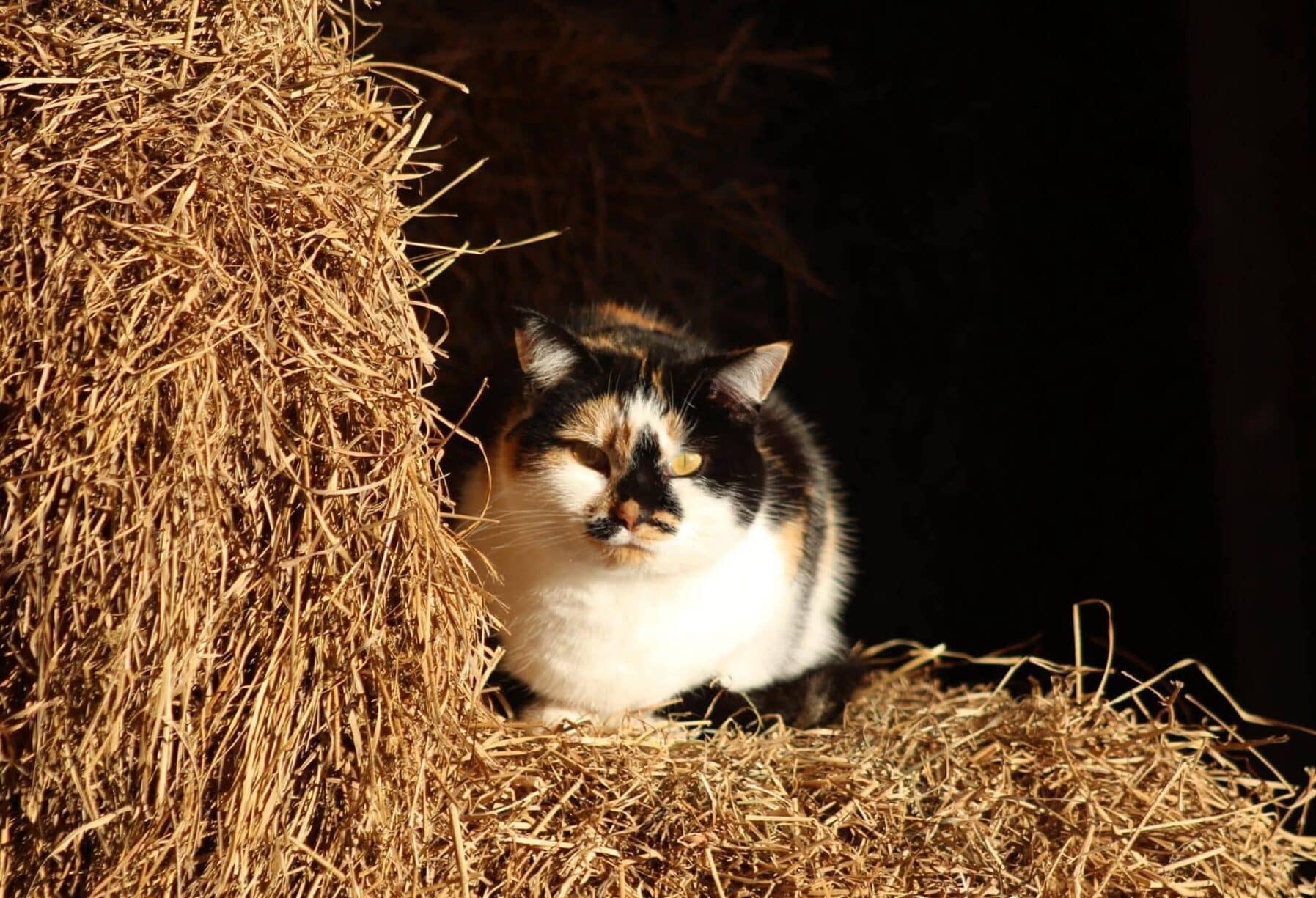
Offered at our Ozaukee Campus, this program is for owned cats who live primarily outside. Any Wisconsin resident who wants to have their barn cat, working cat, or outdoor cat altered is welcome to participate.
If you’re looking to spay or neuter a feral or community cat, please click here for our TNR program instead.
Barn Cat surgeries are offered by appointment at our Ozaukee Campus in Saukville on Thursdays at 8:30 a.m., and pick-up occurs the same day between 3-5 p.m.
Important Notes
- Since this program is for outdoor cats only, every cat who receives surgery will be painlessly ear-tipped under anesthesia during their surgery. This is to indicate to concerned parties who spot them outside that this cat has already been spayed or neutered, is not a lost stray, and does not need to be trapped or caught.
- Cats must arrive in a carrier of some sort. If your cat is not comfortable with handling and you think you’ll need to trap them, we ask that you only make an appointment once you have already trapped the cat. If a trap was required to catch the cat, they must arrive for their appointment inside the trap, along with a blanket or towel draped on top to reduce their stress during the appointment.
- Please note that due to the currently elevated risk of Highly Pathogenic Avian Influenza (HPAI) transmission from birds to cats, we are unable to accommodate surgeries if:
- a cat is from a dairy/poultry farm, has been exposed to a backyard flock, has been exposed to sick/deceased cats, or is showing any neurological symptoms of illness (circling, stumbling, seizures). Thank you for your understanding.
Booking Instructions:
- Please click the blue button below and then select the “Spay/Neuter” Service to request an appointment. Requests are reviewed and confirmed during business hours (Monday – Friday, 7:30 a.m. – 3 p.m.). Please watch for a confirmation email (check your spam folder!) approving your appointment request and important information about surgery day.
- At any given time, you’ll be able to see our booking availability for the next 7 days. If no appointments are available, please check back often.
- When requesting your appointment:
- On Step 2: if you are unsure of the cat’s gender, choose ‘Female’, and give your best estimate for the cat’s weight. Every cat is weighed before surgery and we will update this field if needed.
- On Step 4: give your best estimate of the cat’s age. For breed, most cats are ‘Domestic Short Hair’.
- Provide all cats with water.
- Food should be withheld after 10 p.m. the evening prior to surgery, if possible.
- On the day of surgery, cats should be brought to their service appointment in secure carriers or live traps.
- Full recovery from anesthesia may take up to 24 hours.
- Cats must be kept in a safe, warm place away from other animals to recover from surgery. You can use a garage, basement, bathroom, or extra room, as long as it is safe and warm.
- Post-surgery Food & Water:
– For adult cats over 5 months of age, offer a little food and water the morning after surgery. If they keep the food down, you can offer more.
– For kittens under 5 months of age, offer food the day of surgery once the kitten is fully awake.
– All cats and kittens should be provided with water once fully alert. - The cat may not urinate or defecate during the first day or two of the holding period.
- Cats do not require suture removal after the surgery.
- If any complications arise from the surgery, call WHS for advice.
- Male cats must be kept indoors for at least 24 hours post-surgery. Do not release them unless the cat is eating and fully alert.
- Female cats must be kept indoors for at least 48 hours post-surgery. Do not release them unless the cat is eating and fully alert.
Do not release the cat while they are showing any of these signs:
- Typical post-surgical behaviors:
– Deep sleep
– Head bobbing
– Wobbly movements
– Fast breathing
– Shivering - Behaviors of concern:
– Excessive bleeding from the incision
– Inability to lift head by evening
– Difficulty breathing
– Any abnormalities of the surgical site
– Lethargy beyond the first day of recovery.
If any complications arise from the surgery, call WHS for advice.