Identifying the general age of the baby you found can be a helpful first step.
Nestling birds are naked or down-covered baby birds who are too young to be out of their nests. They sometimes fall from their nest or it’s blown down entirely, and they are found lying on the ground.
Fledgling birds are partially or fully feathered birds that are old enough to leave their nests but are too young to fly well and are therefore still under parental care. They are sometimes found on the ground and assumed to be orphaned when no parent is seen nearby.
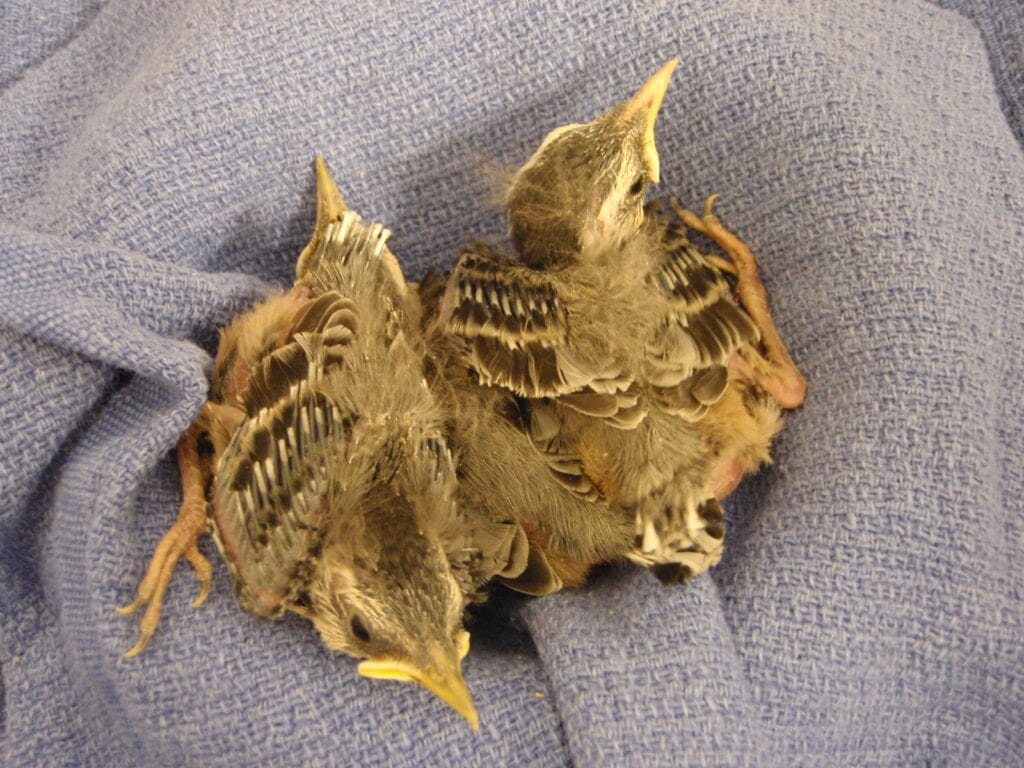
Nestlings
Sparse, downy feathers and bare spots
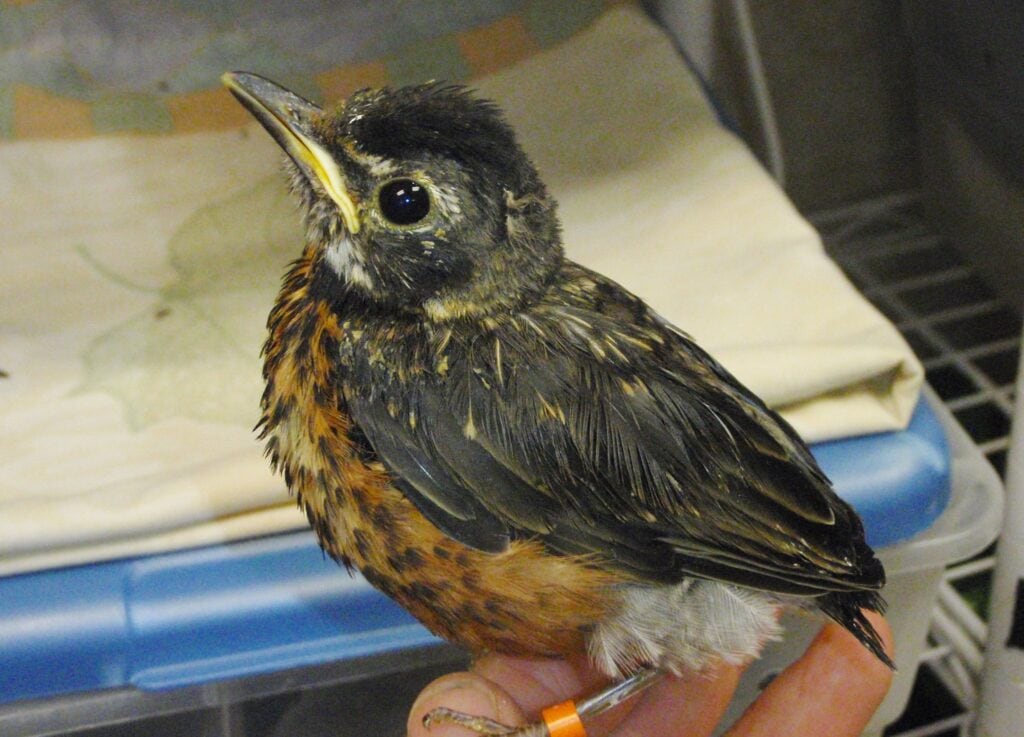
Fledgling
More mature-looking feather coverage
FAQs & Humane Solutions:
For more information on what to do when you’ve found an injured bird, click here.
A nestling bird will not survive for long out of its nest. Nestlings are highly dependent on their parents for warmth, food, and protection from the elements and predators. A fallen nestling should ideally be put back into its nest. The exception to this is if the bird is injured. If you see cuts, bruises, abrasions, or signs of blood on the baby bird, it is unlikely to survive unless it is brought to a licensed wildlife rehabilitator.
- Search for the bird’s nest. Some species nest in trees or shrubs, others nest on ledges or on homes or buildings, and others even nest on the ground. Sometimes just one or more nestlings will have fallen from the nest, other times, the entire nest is found on the ground. While nest materials vary by species, many birds use dried grasses, fine twigs, and sometimes mud and hair to construct their nest.
- If you’ve found the nest up on a ledge or branch and you can safely reach it, you should place the baby bird back in the nest if it is warm. Most birds have little or no sense of smell, so the parents will not reject the baby because a human has touched him.
Note: Some birds or nests can have nest mites, tiny insects about the size of this dot, that may crawl onto your skin. They can’t survive on humans for long, but they may cause minor itching, so be sure to wash your hands and arms with soap and water after you’ve handled a bird. Wear vinyl exam gloves or cleaning gloves, or put plastic bags on your hands before handling a bird or nest. - If the entire nest has fallen, you can try replacing the nest as close as possible to its original location. If the nest is falling apart or you can’t get it to stay up where it belongs, you can place the nest into a small plastic container with holes drilled into the bottom of it (for drainage). The dish gives the nest additional support to hold it together and makes it easier to fasten up in a tree or shrub. Baby birds returned to the nest should be watched from a distance so your presence doesn’t frighten the adult birds, to make sure the parent(s) are returning to care for them. If their parent(s) haven’t returned to feed them after two hours, call your local licensed wildlife rehabilitator.
Fledgling songbirds are mostly or fully feathered young birds that have become too big/old for their nest. They leave the nest before they are able to fly and spend several days learning to fly “from the ground up.” They are vulnerable to predator attacks at this time, but the parents continue to feed and defend their young during this stage. Parent birds may only stop for a few seconds to feed a fledgling before leaving to forage for more food. So, they may be seen without a parent close by. For this reason, people who find a fledgling mistakenly think that the young bird is orphaned. Before assuming that the bird is orphaned and scooping it up for a trip to a wildlife rehabilitator, watch to see if the bird is truly orphaned. The best way to tell if a fledgling is orphaned or not is to watch from a distance, preferably from indoors where the parent birds can’t see you, and wait to see if a parent comes by. If, after a couple of hours, no parent bird comes to feed the fledgling, call your local licensed wildlife rehabilitator for advice. In Milwaukee County, that’s us! You can reach us at 414-431-6204.
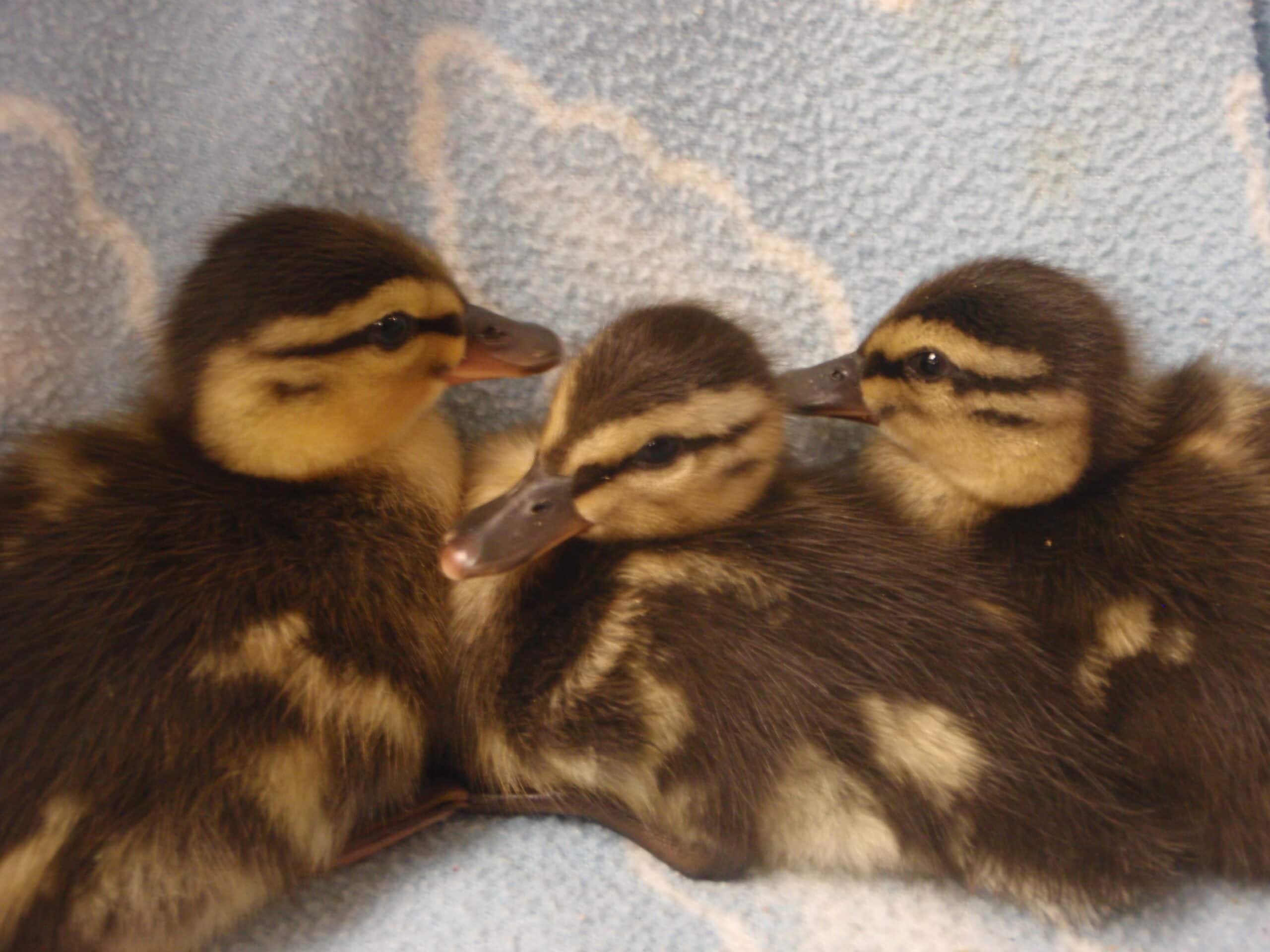
Baby ducks and geese are marched to water from the nest by their mother (in the case of ducks) or by both parents (in the case of geese) soon after hatching. If you find one or more ducklings or goslings without their mother, they’ll probably need professional help if they are to survive. Call your local licensed wildlife rehabilitator for help. In Milwaukee County, please leave us a message at (414) 431-6204.
Please call your local licensed wildlife rehabilitator for help. In Milwaukee County, please leave us a message at (414) 431-6204, and we will get back to you as quickly as possible during business hours.