“I found a House Sparrow or European Starling nest, and I want it removed. What are the next steps?”
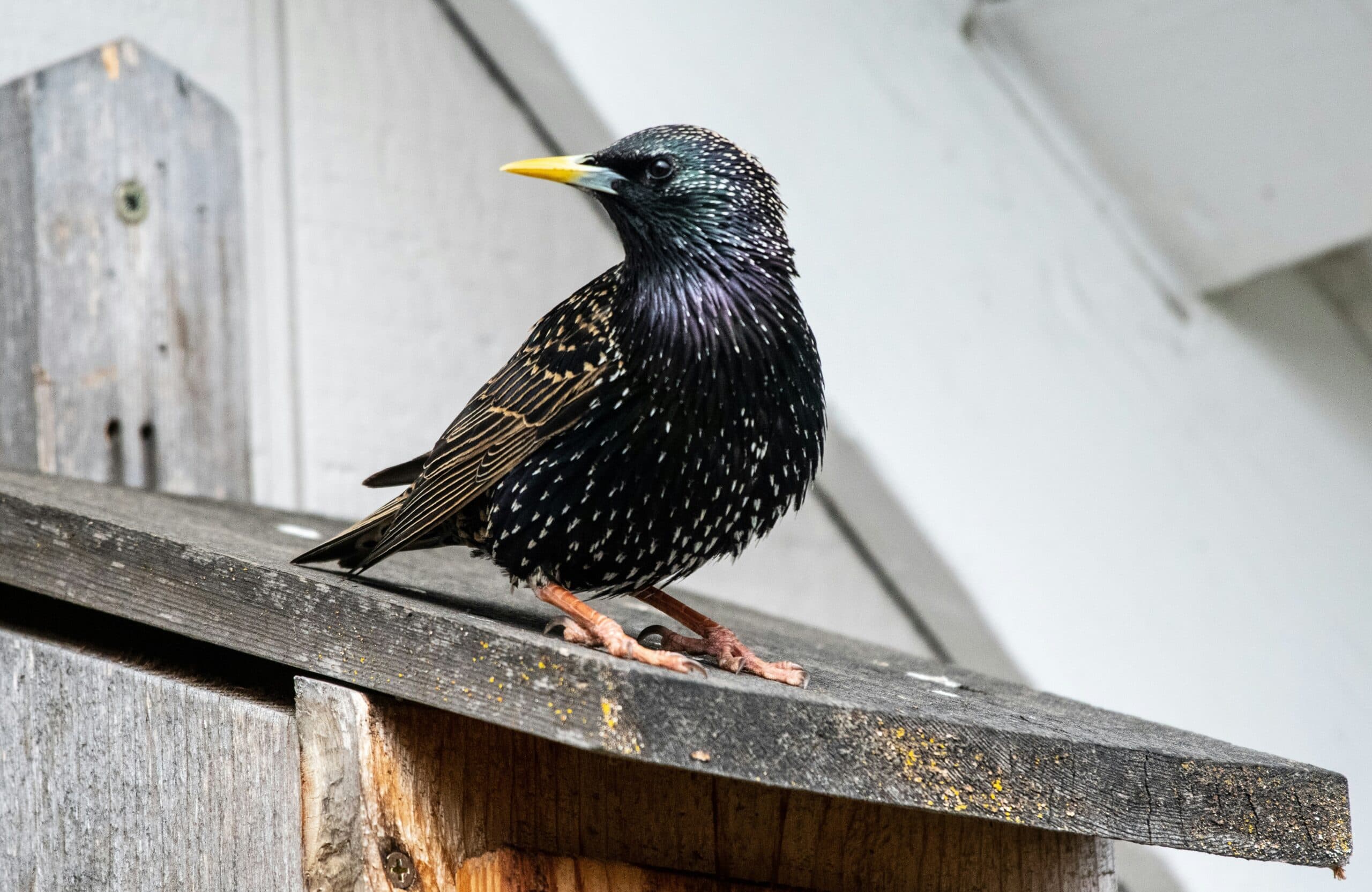
House Sparrows and European Starlings typically create nests in cavities of man-made structures, such as gutters, vents, and eaves. We understand that this is not always the most ideal location for us as humans. If it is an option to keep the nest there until the babies fledge, that is great. Usually it takes 2-3 weeks from the time the young hatch for them to leave the nest. As soon as you notice they have left, you can remove and dispose of the nesting material.
Leaving the nest there is not always an option, though. In those instances, we would recommend creating a make-shift nest out of a milk jug using the instructions below. From there, it can be creatively secured a few inches away from the original nest site, and the parents should continue to care for the babies.
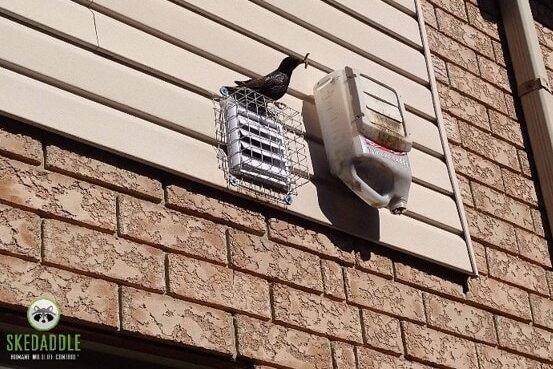
Nest Example #1
The original nest was located in the vent to the left of the make-shift milk jug nest. Skedaddle created an opening on the front of the jug to add the old vent cover, so the parents recognized their new nest location.
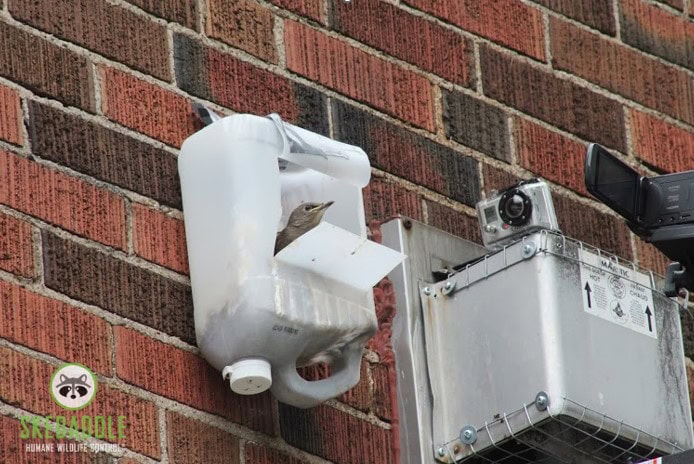
Nest Example #2
In this case, the original nest location was in the vent located to the right of the make-shift milk jug nest. A simple flap cut into the side of the jug serves as a convenient door for the parents.
Steps to make a milk jug nest:
- Carefully cut an opening on the side of the jug where the parents can come and go from
- Leave the cap off for drainage so the nest doesn’t get flooded if it rains
- Place the original nesting material into the jug
- Secure the jug upside down a few inches away from the original nest site
- Gently add the babies into the jug
- Monitor from a distance to confirm the parents are continuing to care for the young in this new location
If after 2 hours, you haven’t noticed any activity around the new nest, please reach out to your nearest licensed wildlife rehabilitator for further advice. They may instruct you to bring the babies to them for care.
If you would rather hire someone to do this work for you, please visit our “Hiring an Animal Removal Service” page.
“I found an orphaned or injured non-native bird. What are my options for getting it help?”
WHS does not rehabilitate non-native birds. We allocate our limited resources to the wild animals who need us most and those who are native to Wisconsin. If the bird is injured or truly orphaned, the only service we’re able to provide is humane euthanasia to prevent them from a much more unpleasant fate. We’re so sorry and appreciate your understanding.
A list of other certified wildlife rehabilitators in the area can be found at https://dnr.wisconsin.gov/topic/wildlifehabitat/directory/statewide. In the meantime, please keep the bird in a dark, quiet, warm area away from people or pets. Please refrain from offering the bird any food or water, as it may do more harm than good medically for the bird, but also may prevent their admission into these alternative centers.
“I have found a Rock Pigeon that is unable to fly. What do I do?”
Is there a plastic band on its leg?
If yes: That is a domestic rock pigeon and likely someone’s pet. If you are located in Milwaukee County, we would recommend contacting the Milwaukee Area Domestic Animal Control Commission (MADACC) at 414-649-8640, as they are the stray animal holding facility for the county. If you are located outside of Milwaukee County, reach out to your local humane societies to see which organization is the contractual stray facility that you should bring the bird to.
If no: This is a feral rock pigeon from a wild population. It is a species of bird that is not native to Wisconsin. Please see “I found an injured or orphan non-native bird” above.