• Healthy Bunny Diet and Nutrition

    A balanced diet is essential for a rabbit, just like with all living creatures, so there is a range of foods that you must feed your bunny.

    Always consult a veterinarian specializing in rabbits for your specific rabbit’s needs. 

    Rabbit Pellets
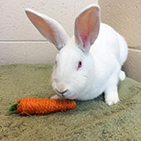
    Small pellets of food that are high in fiber. Most veterinarians recommend 1/4 cup of pellets for every 5 pounds of weight. All pellets can lose their nutrients so make sure they are kept refrigerated or cool and are kept dry. 

    Loose Timothy Hay

    Timothy hay should be fed daily in unlimited quanities. It aids in normal digestion and helps prevent hairballs. The chewing a rabbit does with hay also helps to wear down their teeth so there is less chance of them becoming overgrown. 

    Veggies

    Given in limited quantities and added slowly to their diets, fresh veggies are a wonderful addition. Carrots, carrot tops, beet tops, collard greens, dandelion greens, dark leaf lettuce (not iceberg), alfalfa sprouts, clover sprouts, clover and parsley are all good diet choices. You want to avoid cabbage, kale, rhubarb, iceberg lettuce, potatoes and beans. 

    Chewing Wood

    Chewable wood should always be available. Fruit tree branches (pesticide free) are wonderful, apple pear and willow are best; steer away from cherry, plum and apricot. 

    Night Feces

    This is not something that you have to supply for your rabbit, but you will notice them eating these “special droppings” and they are an essential part of their diet. During certain times of the day, usually in the evening, you will notice your rabbit licking his anal area and actually eating some of the droppings. These cecal pellets are softer and greener than the normal pellets they excrete and are rich in vitamins and nutrients.

    How Much Food?

    Now that you know what to feed your rabbit lets talks about the appropriate quantities to feed.

    Teenage Rabbits – 7 weeks to 7 months

    • Unlimited alfalfa based pellets  
    • Unlimited timothy hay  
    • At 12 weeks, introduce veggies slowly, one at a time, in 1/2 ounce quantities.

    Young Adults – 7 months to 1 year

    • Unlimited timothy hay  
    • Decrease timothy based pellets to 1/4 cup per five punds of body weight  
    • Increase daily vegetables gradually  
    • Fruit should be used sparingly and as more of a treat than part of a meal. No more than 1 ounce to 2 ounce per 6 pounds body weight should be given because of the calories. 

    Mature Adults – 1 to 5 years

    • Unlimited timothy hay  
    • ¼ to five pounds of body weight (depending on metabolism and/or proportionate to veggies)  
    • Although you do not need to cut up vegetables before you offer them to your rabbit, a good measurement of vegetables is a minimum 2 cups chopped vegetables per six pounds body weight
    • Fruit should be used sparingly and as more of a treat than part of a meal. No more than 1 ounce to 2 ounces per sixpounds body weight should be given because of the calories. 

    Senior – over 6 years

    • If sufficient weight is maintained, continue adult diet
    • Frail, older rabbits may need unrestricted pellets to keep weight up.
    • Alfalfa can be given to underweight rabbits, only if calcium levels are normal.

    Consult your veterinarian if you are considering changing your rabbit’s diet because of weight loss. There may be underlying medical issues causing it. Annual blood work-ups are highly recommended for geriatric rabbits.
  • Handling Rabbits

    Many people are disappointed to find that rabbits rarely enjoy being cuddled or picked up routinely.

    Most rabbits can be taught to accept routine handling, but there is nothing wrong with a rabbit that prefers to sit beside you rather than in your lap.

    Remember that rabbits are a prey species and that a “friendly restraint” is difficult to distinguish from being captured by a PREDATOR.

    Picking Up Your Rabbit

    It is easier to pick up a rabbit that trusts you.

    You can earn a rabbit’s trust with patience and by letting him approach you without grabbing him. Rabbits can sense if you are confident or not and will fuss and wiggle if you hesitate or seem unsure of yourself when you try to pick them up.

    It is sometimes easier to train a rabbit to enter a carrier than to actually pick them up. You can lure him into a carrier with a bit of an apple or carrot

    Holding Your Rabbit

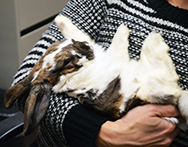
    If you do attempt to lift your rabbit, make sure that you support both the front and the back end.

     It’s important to support their back legs by placing one arm behind their rump and prevent them from hopping away from you and injuring themselves by placing the other arm in the front of the rabbit. Squeezing a rabbit can be terrifying to them and will cause them to thrash and kick in a panic. Your hands should be used to support the rabbit. Never lift a rabbit by the ears or scruff of the neck and never let a small child pick up a rabbit.

    Be Gentle!

    Frightened rabbits will bite, kick or scratch.

    This will cause injury both the child and the rabbit. Many rabbits sustain fractures or become paralyzed from being dropped by children. If you ever feel that you are loosing grip of the rabbit, crouch down quickly and release your hold.

  • Grooming Your Rabbit

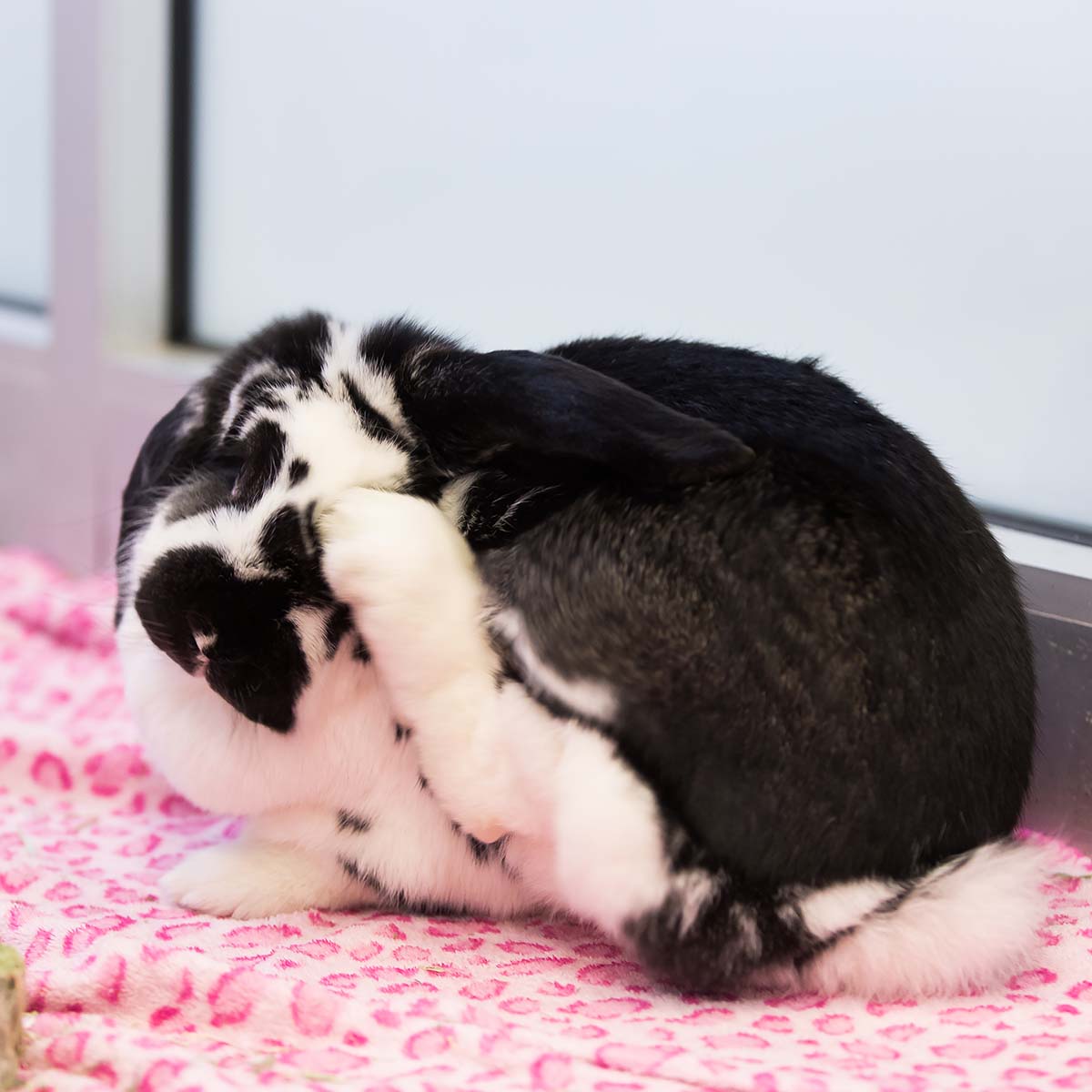
    Rabbits groom each other and you, if you are lucky!

    They groom each other for cleanliness and also to show affection. Grooming your rabbit is a wonderful time to bond and is also necessary for your rabbit’s health and wellbeing. There are four different types of grooming to consider.

    Coat Care

    Bunnies shed just as all animals with fur do and will typically go through a few major sheds each year.

    Your rabbit is going to need brushing just like cats and dogs and the more hair that ends

     up in the brush, the less hair that will end up on the floor and in your rabbit’s stomach. A slicker brush is generally used with rabbits. A flea comb is also a wonderful way to groom your rabbit and they seem to love it. When you first bring your rabbit home, start brushing or combing him, starting with the least threatening areas on his body. Start with a upper head areas and back and don’t move down to the lower face and chin area until bunny has had a few weeks of grooming already and trusts you enough to relax and enjoy her beauty time.

    Fleas/Fur Mites

    Even the best-groomed rabbit, if allowed outdoors for any amount of time, will eventually get fleas.

    Many different flea and mite products are available that can be powdered, sprayed, bombed or given orally. Many flea preventatives have the potential of being harmful to your rabbit. Check with your vet to help you decide on a flea prevention program that works best for you and your rabbit. Flee dips and baths are never recommended for rabbits. If you need to find a veterinarian in Milwaukee or Ozaukee County that specializes in rabbits, click here.

    Spot Cleaning

    There are times when your bunny may get soiled and need a spot cleaning.

    You can use safe products that are designed for rabbits, a mild dishwashing detergent or non-medical puppy shampoo to clean small dirty spots on your rabbit. These products can also be used to clean off your bunny’s hindquarters, if soiled. If the hidquarters are soiled, it may be due to a medical condition or improper diet and you will need to consult your veterinarian.

    Toenail Clipping

    Your rabbit will need her toenails clipped on a regular basis to keep her from getting snagged in the carpeting or in the cage.

    You may need a helper to hold your rabbit while you trim her nails. Clip her nails and avoid cutting into the veins by using a flashlight to see through darker toenails. Declawing your rabbit is never recommended and can lead to serious infections. Instead, keep their nails trimmed and give them a large hay box to dig. You will both be happier in the long run.

  • Bunny-proofing Your Home

    Rabbits need to chew, so instead of getting frustrated with your new bunny for what is normal behavior, plan ahead and bunny proof your home.

    There are a few steps to bunny proof. It takes some work, but once it is done both you and bunny can rest at ease that she and your belongings will be safe.

    Here are some things to think about. If there are visible cords (telephone, electrical, blinds), bunny will chew on them. If there are books on lower shelves, bunny will most likely find them irresistable and need to take a chomp out of them. (The easiest solution to this is to move books off the lowest level.)

    Lastly, if you have something that can be used as a hopping board such as a chair, ottoman or step stool, your rabbit may decide to hop up onto a higher level. There are a couple different ways to make your home safe.

    Removal

    The best solution for bunny proofing your home is to remove the potential problems.

    Using an overhead light instead of a lamp is one example. If you absolutely can not have your bunny chewing on your heirloom antique chair, it is best not to give him access to it. This is the only fail safe way of bunny proofing.

    Repellents

    Bunnies’ noses are very sensitive.

    By spraying an area with perfume, shaving lotion or another fragrant you may be able to convince bunny that that area is too smelly. Experiment with different smells; each bunny is an individual and has different preferences. Be aware that repellents will need to be reapplied and may discolor furniture or carpet.

    Cover-Ups

    If the sofa sits right in front of the light cord you are in luck.

    Otherwise you may have to use something else to cover-up dangerous objects or areas. Here are some ideas. Plexiglass can be used to cover up linoleum or hardwood floors or to cover a lower area of your wall. A strip of untreated lumber can be tacked to the baseboard and will give bunny an acceptable thing to chew. Polyethylene tubing can be split lengthwise and then used to put electrical cords inside. Seagrass mats are a great protector for more expensive rugs and are relatively inexpensive. Blankets and towels can be used to throw over upholstery or beds to protect them from teeth and nails.

    Encourage your rabbits hopping, chewing, digging and exploring. That is what makes a rabbit… a rabbit!

  • Bunny Housing

    Your bunny’s cage should be as large as possible.

    A general rule of thumb for the minimum size of the cage is it should be three to four times as long as your bunny when she is stretched out. Of course, if you have a baby bunny you want to look ahead to her adulthood so you won’t have to buy another cage as she grows.

    The cage will ideally have a large side door for your bunny to be able to hop out of comfortably and a top door so that you can reach in easily and scoop bunny out if you need to.

    Items To Include In Your Rabbit’s Cage

    Rabbits love to toss and nudge. Great toys for this include thick plastic baby toys such as keys and stackable cups or special plastic rabbit toys. Because rabbit teeth continue to grow through their life time, they need to chew on things. Toilet paper and paper towel rolls, wood blocks and apple or pear twigs and small branches are great ways to take care of their chewing needs.

    Place her water bottle, a pellet crock, a litter box, unlimited timothy hay, soft floor covering (a synthetic sheepskin rug is ideal) and some rabbit toys in the cage. Ideally, if the cage is large enough, your rabbit should have a comfy hiding spot to run to if she is frightened.

    Minimum guidelines for cage sizes

    • Small rabbits: 3’x 2’ x 1½’ high
    • Medium rabbits: 4’ x 2’ x 2’ high
    • Large rabbits: 5’ x 2’ x 2’ high
    • Giant rabbits: 6’ x 2½’ x 2½’ high

  • Bunny Basics

    It is best to obtain a rabbit from an animal shelter or rescue group.

    Rabbits available for adoption from WHS will come to you already spayed or neutered and well socialized. Adult rabbits make great choices since their size and personalities are known and they are easier to litter-box train than babies. You will also find the most accurate information on rabbit behavior and care from WHS and organizations like the House Rabbit Society. Purchasing a rabbit from a breeder or pet store encourages over-breeding. Rabbits are bred for appearances rather than temperament.

    Rabbit Personalities & Life Span

    Rabbit personalities vary greatly from one rabbit to the next even among littermates.

    Rabbits can be silly, timid, shy, curious, and high spirited regardless of sex or breed type. They show affection in characteristic ways; choosing to sit near you, climbing on your back or nibbling at your socks. Some will even lick your hands or face. Even feisty rabbits can become affectionate companions, if given a chance to bloom. Spaying or neutering eliminates many behavior problems and prevents many rabbit diseases. Smaller rabbits such as dwarfs are usually more active than larger rabbits. They are able to jump much higher than their larger cousins because of their lighter weight. The average life span for a spayed or neutered house rabbit is eight to ten years, although many live even longer.

  • Adolescent Rabbits

    Adolescence usually begins as early as four months and can end as late as two years.

    Behaviors signaling the onset of adolescence include: loss of house training, spraying, biting, nipping, nest building, destructiveness and courtship behaviors such as mounting and circling. This is a normal part of development, not a sign that something is wrong with your rabbit or that she is bad or mean. It is time to have your rabbit spayed or neutered. Qualified veterinarians are able to spay and neuter rabbits.

    Click here for a list of qualified veterinarians in the Milwaukee area.

  • Safe Haven

    Safe Haven

    Safe Haven Foster Program

    Currently available through our Milwaukee Campus

    The Wisconsin Humane Society Milwaukee Campus and Sojourner Family Peace Center have partnered to provide the Safe Haven program, which offers up to 60 days of shelter for animals from families affected by domestic violence.

    Research finds that 75% of abused women who have companion animals report a history of their companion animal being threatened or intentionally harmed by their intimate partner*. Abusers often use animals as pawns to manipulate and control the survivor, taking advantage of the survivor’s concern for his or her animal. Abusers may threaten, harm, or kill animals to intimidate survivors, demand silence about the abuse, or prevent them from leaving.

    Many survivors are unable to leave an abusive situation because they fear for their animal’s safety. The Safe Haven program makes it possible for survivors to leave an abusive relationship without losing their companion animal. Animals provide companionship, comfort, and unconditional love to survivors and their children affected by domestic violence, and preserving the bond between families and their animals is vitally important.

    I need help. How do I get support?

    • Milwaukee area residents: to enroll in the Safe Haven program, contact the Sojourner Family Peace Center at 414-933-2722
    • Residents outside of Milwaukee: click here to find resources available near you

    I want to help. How can I support the Safe Haven Program?

    • Volunteer as a foster parent – Opening your home to an animal through the Safe Haven program not only provides a comfortable home environment for the animal, but also peace of mind for their family. Your generosity will help save lives – both human and animal. Find more information and apply here. 
    • Donate! You can make a contribution exclusively for Safe Haven here

    “Our friend Joe Pabst has been a driving force in our ability to offer this important program, and we’re so appreciative for his partnership. This program is one of the many ways we are able fulfill our mission of making a difference for animals AND the people who love them. We are grateful to the Sojourner Peace Center to help accomplish that, by offering families in these unthinkable situations a safe place for their pets while they find safety themselves.” -Alison Fotsch, WHS President & CEO

    “I come from a family who love animals. One of my sisters was a victim of domestic violence and I believe that her pets were an obstacle in her ability to leave. They were very important to her.  Despite our efforts and many interventions, we couldn’t save her. In the people the Safe Haven Foster Program helps, I see my sister. I see a survivor. I see a person with another chance.” -Joseph Pabst


    *McDonald, S. E., Collins, E. A., Maternick, A., Nicotera, N., Graham-Bermann, S., Ascione, F. R., & Williams, J. H. (2019). Intimate Partner Violence Survivors’ Reports of Their Children’s Exposure to Companion Animal Maltreatment: A Qualitative Study. Journal of Interpersonal Violence, 34(13), 2627-2652. https://doi.org/10.1177/0886260516689775 

  • WI Animal Welfare Organizations

    WI Animal Welfare Organizations

    Is the Wisconsin Humane Society a statewide organization?

    No. WHS operates six sheltering locations in Racine, Milwaukee, Ozaukee, Green Bay, Door County, and Kenosha, as well as our Spay/Neuter Clinic in West Allis and Wildlife Rehabilitation Center in Milwaukee. Our name can be confusing for those who aren’t familiar with us, but we were founded as the Wisconsin Humane Society in 1879 when we were the only animal welfare organization in the state. In relatively recent history, five other shelters have reached out to us asking to merge, leading to our current locations. Aside from our six campuses, every other shelter in the state (and in most states) operates independently from one another, and there is no national affiliation or umbrella group.

    Here is a list of other animal welfare agencies and adoption resources in the state:

    CountyOrganizationCity/Town
    AdamsAdams County Humane SocietyFriendship
    AshlandChequamegon Humane AssociationAshland
    BarronHumane Society of Barron CountyBarron
    Bayfield—– —–
    BrownGreen Bay Animal RescueGreen Bay
    BrownLucky 7 Dog RescueGreen Bay
    BrownSafe Haven Pet SanctuaryGreen Bay
    BrownWisconsin Humane Society Green Bay CampusGreen Bay
    BuffaloBuffalo County Humane AssociationMondovi
    BurnettHumane Society of Burnett CountySiren
    CalumetEastshore Humane AssociationChilton
    ChippewaChippewa Humane Association Chippewa Falls
    ClarkClark County Humane SocietyNeillsville
    ColumbiaColumbia County Humane SocietyPortage
    CrawfordRivers and Bluffs Animal ShelterPrairie du Chien
    DaneMadison Cat ProjectMadison
    DaneDane County Humane SocietyMadison
    DodgeDodge County Humane SocietyJuneau
    DoorWisconsin Humane Society Door County CampusSturgeon Bay
    DouglasHumane Society of Douglas CountySuperior
    DunnDunn County Humane SocietyMenomonie
    Eau ClaireEau Claire Humane AssociationEau Claire
    Florence—– —– 
    Fond du LacFond du Lac Humane SocietyFond du Lac
    ForestForest County Humane SocietyCrandon
    GrantGrant County Humane SocietyLancaster
    Green  Green County Humane SocietyMonroe
    Green LakeGreen Lake Area Animal ShelterGreen Lake
    IowaIowa County Humane Society Dodgeville
    IronH.O.P.E. Animal ShelterIron County
    JacksonJackson County Animal ShelterBlack River Fall
    JeffersonHumane Society of Jefferson CountyJefferson
    JeffersonWatertown Humane SocietyWatertown 
    JuneauCarl W. Nelson Animal Shelter Mauston
    KenoshaWisconsin Humane Society Kenosha CampusKenosha
    Kewaunee—– —– 
    La CrosseCoulee Region Humane SocietyOnalaska
    Lafayette—– —– 
    LangladeLanglade County Humane SocietyAntigo
    LincolnLincoln County Humane SocietyMerrill
    ManitowocLakeshore Humane Society Manitowoc
    MarathonHumane Society of Marathon CountyWausau
    Marinette—– —– 
    Marquette—– —– 
    MenomineeMenominee Animal ShelterMenominee
    MilwaukeeMilwaukee Area Domestic Animal Control CommissionMilwaukee
    MilwaukeeWisconsin Humane Society Milwaukee CampusMilwaukee
    MonroeChasing Daylight Animal ShelterTomah
    OcontoOconto Area Humane Society & Animal Shelter, IncOconto
    OneidaOneida County Humane SocietyRhinelander
    OutagamieFox Valley Humane AssociationAppleton
    OzaukeeWisconsin Humane Society Ozaukee CampusSaukville
    PepinPepin County Humane SocietyDurand
    Pierce—– —– 
    PolkArnell Memorial Humane SocietyAmery
    PortageHumane Society of Portage CountyPlover
    PriceCatkins Animal RescuePark Falls
    RacineWisconsin Humane Society Racine CampusMount Pleasant
    RichlandOcooch Mountain Humane SocietyRichland Center
    RichlandRichland Area RescueRichland Center
    RockHumane Society of Southern WisconsinJanesville
    RuskRusk County Animal ShelterLadysmith
    SaukSauk County Humane SocietyBaraboo
    SawyerNorthwoods Humane SocietyHayward
    ShawnoShawano County Humane SocietyShawano
    SheboyganHumane Society of Sheboygan CountySheboygan
    SheboyganWisconsin Puppy Mill Project, IncSheboygan
    St. CroixSt. Croix Animal FriendsHudson
    TaylorTaylor County Wisconsin Humane Society, IncMedford
    TrempealeauTrempealeau County Humane SocietyBlair
    VernonDriftless Humane SocietyViroqua
    VilasHumane Society of Vilas CountyEagle River
    WalworthLakeland Animal ShelterDelevan
    WashburnWashburn County Area Humane SocietySpooner
    WashingtonWanakia Wildlife RehabRichfield 
    WashingtonWashington County Humane Society, IncSlinger
    WaukeshaElmbrook Humane SocietyBrookfield
    WaukeshaHumane Animal Welfare SocietyWaukesha
    WaupacaHumane Society of Waupaca CountyWaupaca
    WausharaWaushara County Animal ShelterWautoma 
    WinnebagoNeenah Animal ShelterNeenah
    WinnebagoOshkosh Area Humane SocietyOshkosh
    WoodMarshfield Humane Officer DepartmentMarshfield
    WoodSouth Wood County Humane SocietyWisconsin Rapids
  • Finding Your Match

    Finding Your Match

    Considering adding a new family member?

    Get the whole family involved.

    Choosing a new animal companion is exciting!

    Start your selection process at home by polling family members about what species, size, and personality will best suit your environment and lifestyle. The adoption counselors at the Wisconsin Humane Society will help you to translate all that information into a great match. If you have one or more pets at home, describe them to our adoption counselors and they can help you select which animal will be able to adapt to your household.  

    Ask questions.

    When interacting with your potential new companion animal, ask about his or her behavior.

    An animal’s personality is the most important factor in a successful adoption. The Wisconsin Humane Society evaluates all animals available for adoption to assess their individual personalities. adoption counselors are more than happy to answer any of your questions. 

    Be prepared for your new animal’s arrival with all the necessary supplies.

    You can find everything you need at Animal Antics, the Wisconsin Humane Society’s retail store!

    Animal Antics is continually stocking new items and old favorites and our adoption counselors will help you make the right product selections for your new family member. Plus, adopters get 10% off! After your adoption, you can still purchase the items you want online or stop in the WHS campus nearest you during adoption hours to shop. All proceeds from our Animal Antics store benefit the animals and families served by the Wisconsin Humane Society!

    Adopt!

    Find your new best friend at WHS or the shelter nearest you!

    The Wisconsin Humane Society offers a wealth of resources to adopters, including adoption counseling, behavior support, training classes, low-cost vaccine clinics, and adopter perks from local businesses. In addition, all animals are spayed or neutered, microchipped, and given initial vaccinations. Learn more about the adoption process at WHS, then check out everything that’s included in your adoption fee when you adopt at www.wihumane.org/congrats.