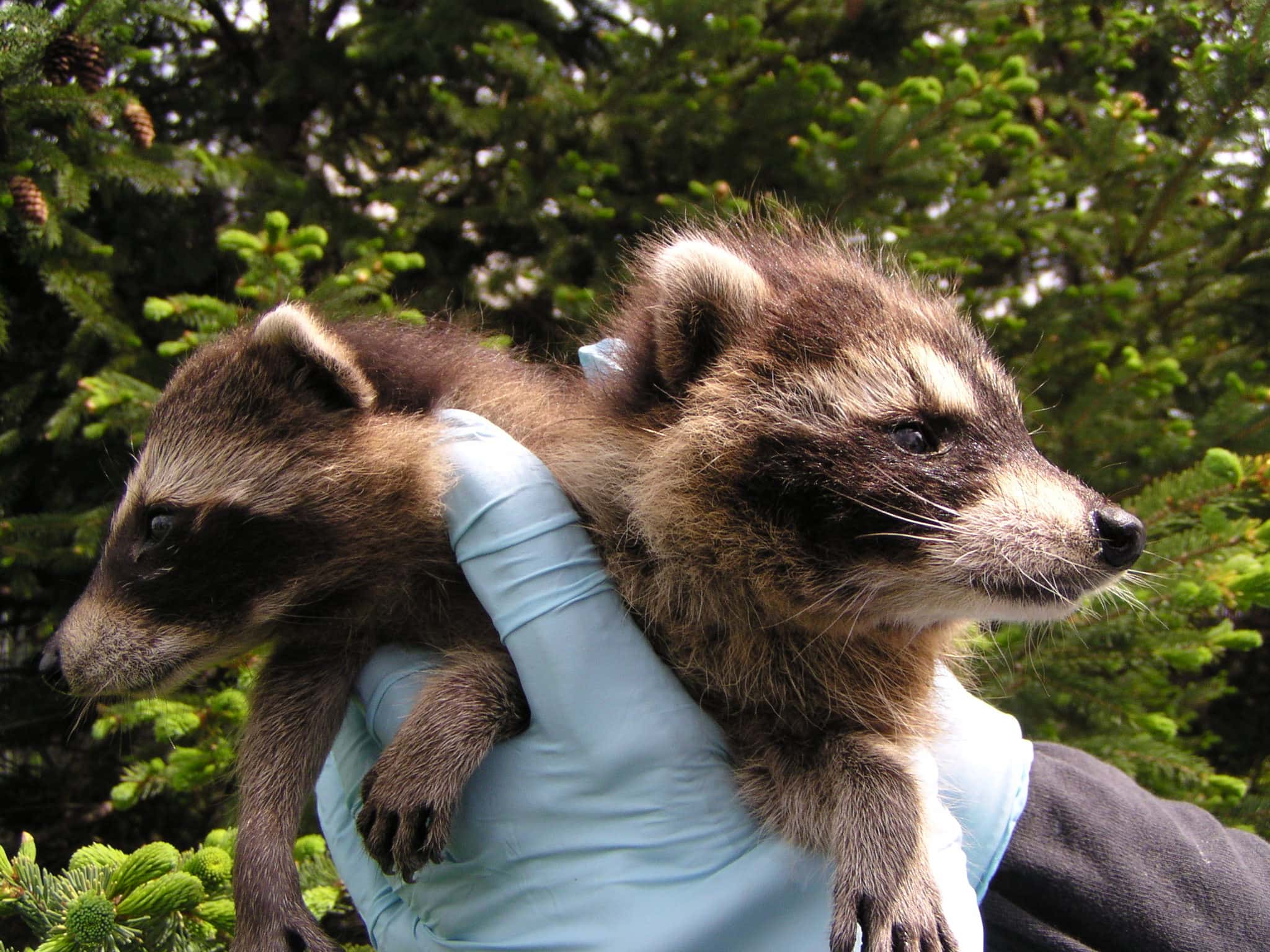
Mother raccoons do not have babysitters or daycare services for their kids, so busy moms must leave their babies unattended for periods of time while they travel around to find food. This often means being gone for hours at a time, which can lead concerned onlookers to believe the babies have been abandoned. Use the resources below to find out whether or not the baby truly needs help and what to do if you must intervene.
IMPORTANT: If you are assisting a young raccoon that you think may be injured or orphaned, it is imperative that you protect yourself and others from being bitten or scratched by the raccoon. While rabies in raccoons is not currently known to be common in Wisconsin, rabies is a deadly virus, and possible exposures via mammal bites and scratches MUST be taken very seriously and handled properly. If you are bitten or scratched by a wild mammal, immediately wash the wound thoroughly for several minutes with soap and running water. Then call your doctor or local health department for further advice. For more information, visit the Centers for Disease Control and Prevention website here.
FAQs & Solutions
If the baby is warm and does not look visibly sick or injured, they should be left where they are. Just because a baby raccoon is alone doesn’t mean they’ve been orphaned or abandoned. Raccoon moms don’t have babysitters or daycare services, so the busy mothers must leave their babies unattended for periods of time while they travel around to find food. This can last for hours at a time.
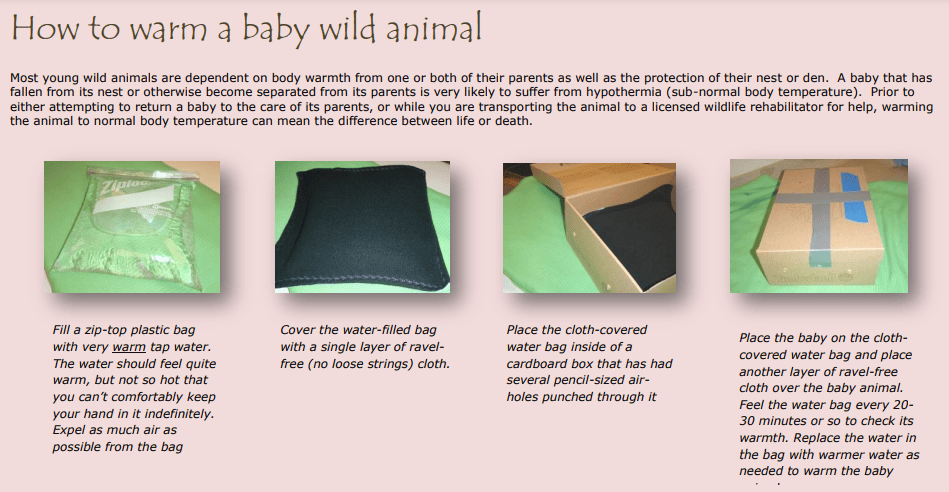
If they have already been displaced, return them to the vicinity of where they were found. To give the mother raccoon a good chance of finding her baby again, place the raccoon in a box or other container that the baby cannot get out of, but the mother can get into it to retrieve her baby. (See “How to Warm a Baby Raccoon,” below.) Place it as close as safely possible to where it was found. Make sure the baby raccoon is protected from the elements (i.e. rain) and leave it out overnight. Check the box/container in the morning.
If the baby is still there, call a licensed wildlife rehabilitator for help. Do not try to care for the raccoon yourself.
If you find a baby raccoon who looks injured/sick, seems very weak, or has flies, fly eggs (they look like tiny whitish or yellowish rice grains), maggots, or ants on it, you can contact a licensed wildlife rehabilitator to see if they can help. If you are in Milwaukee County, you are welcome to call us at 414-431-6204. To help you find a licensed wildlife rehabilitator in your area, CLICK HERE or call the DNR at (608) 267-0866. It’s important to note that baby raccoons require 4-5 months of care before they can survive on their own in the wild, and many facilities – including ours – quickly reach capacity for raccoons in the spring or early summer. We truly sympathize with community members who’ve found a raccoon in need when there is no place to take them, as our team shares your deep love for wildlife, but please know that we still offer humane euthanasia as a painless passing for those who would otherwise suffer if left in the wild.
IMPORTANT: Please do not attempt to raise these animals yourself. It is illegal, they may have a disease or parasites that could be transmitted to you or your pet, and they deserve the experienced care of a licensed wildlife rehabilitator.
Raccoons are nocturnal animals, and since you are hearing the babies cry at night, they are probably crying because their mom has left them to go out foraging for food. Crying that goes on for a few hours, especially if it happens during the day when the mother Raccoon should be “home” with her young, may be an indication that something is wrong. But before concluding that the babies are orphaned and removing them from the nest, please talk with a licensed wildlife rehabilitator who is experienced with raccoons. For more information on wild animals in your chimney or fireplace, please CLICK HERE.
No. If a mother rejects one of its young, it is usually because the baby is injured, sick, cold, or has a birth defect; it will not reject a baby just because it was handled by a human.
No. There are many reasons why you should not hand-raise a baby raccoon (or any other wild animal) on your own:
- It is against the law.
- If raised by someone other than an experienced, licensed wildlife rehabilitator, the raccoon will ultimately lack the necessary survival skills acquired from its mother and will not stand much chance of surviving in the wild.
- The raccoon can carry diseases and parasites that can cause serious illness or even death to your family members and pets unless handled properly
- As it gets older, the raccoon will eventually become unmanageable and will be capable of inflicting serious bite wounds
- Wild animals have nutritional needs that are different from domestic animals – if improperly fed, the raccoon may suffer from nutritional deficiencies, some of which can be crippling.
Secure the baby raccoon in a container from which it can’t escape. If it is one of a litter, keep the raccoon that bit someone separated from its littermates. Keep pets and people away from it and do not handle or let anyone else handle the raccoon. Immediately and thoroughly wash the bitten or scratched area of the body for a minimum of 5 minutes with warm water and soap. Then call your physician for advice and possible treatment, and the public health department of the municipality or county in which the bite or scratch occurred to rfile a report. The health department will ask you about the circumstances of the bite or scratch and tell you how to proceed. They may decide that the risk of rabies transmission requires that the raccoon be tested for rabies. If you are in the City of Milwaukee, you can reach that health department by calling 414-286-3521. If you are in Milwaukee County, you are welcome to call us at 414-431-6204 for further information.